Exhaust Fans
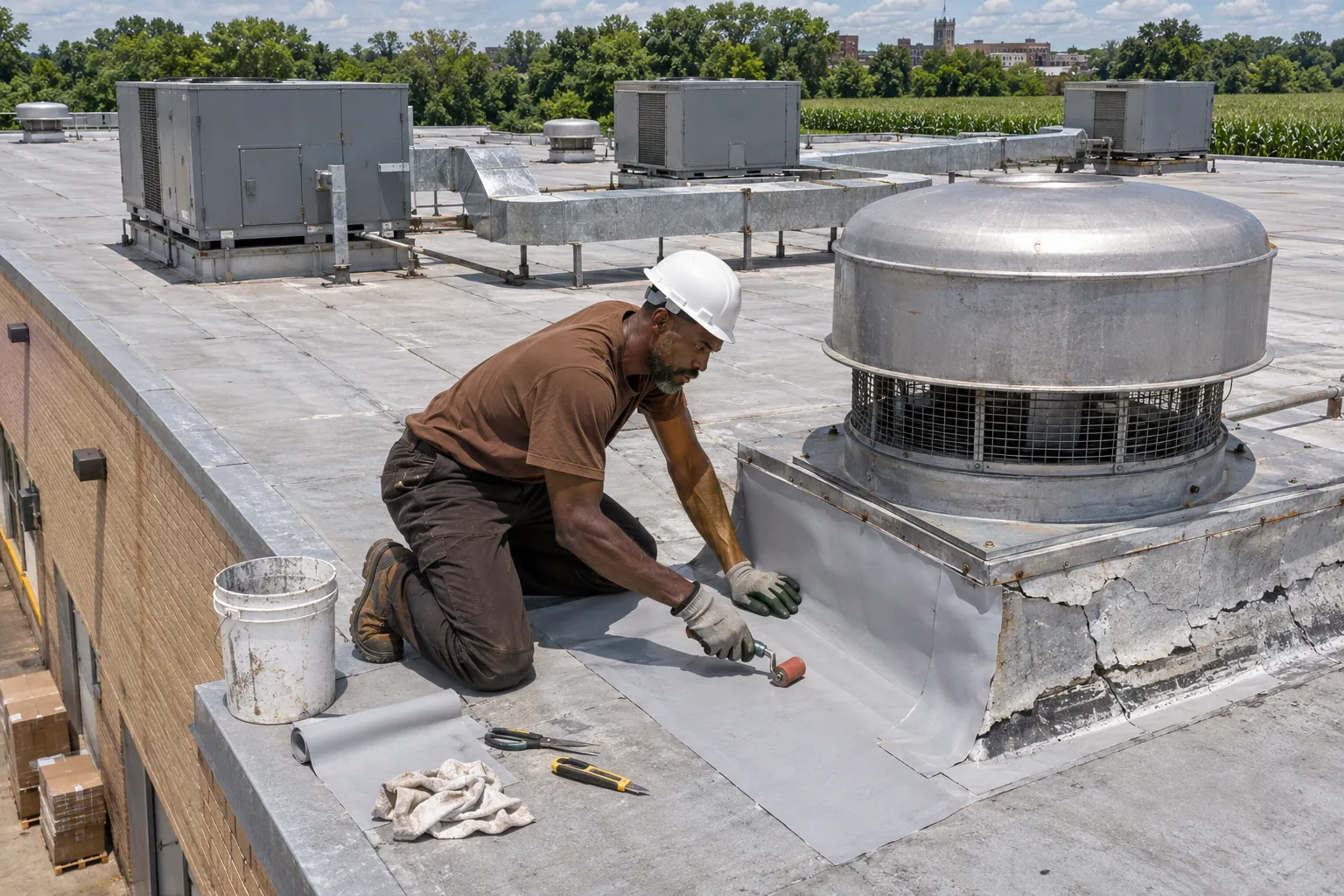
Heat and residue soften or stain some membranes around the fan, and the curb flashing dries out and splits along its top edge where the fan housing sits.
For Terre Haute industrial roof repair, we fix curbs, residue-worn membrane, and seams on plant roofs while the building keeps running below.
Terre Haute industrial roof repair keeps a working roof dry one area at a time. These signs show whether repair still fits.
Plant roofs wear fastest where equipment and people work on them. These five zones get checked first.
Heat and residue soften or stain some membranes around the fan, and the curb flashing dries out and splits along its top edge where the fan housing sits.
Large units sit on curbs whose flashing gets kicked and bent during service calls and filter changes, opening corners that snowmelt then finds.
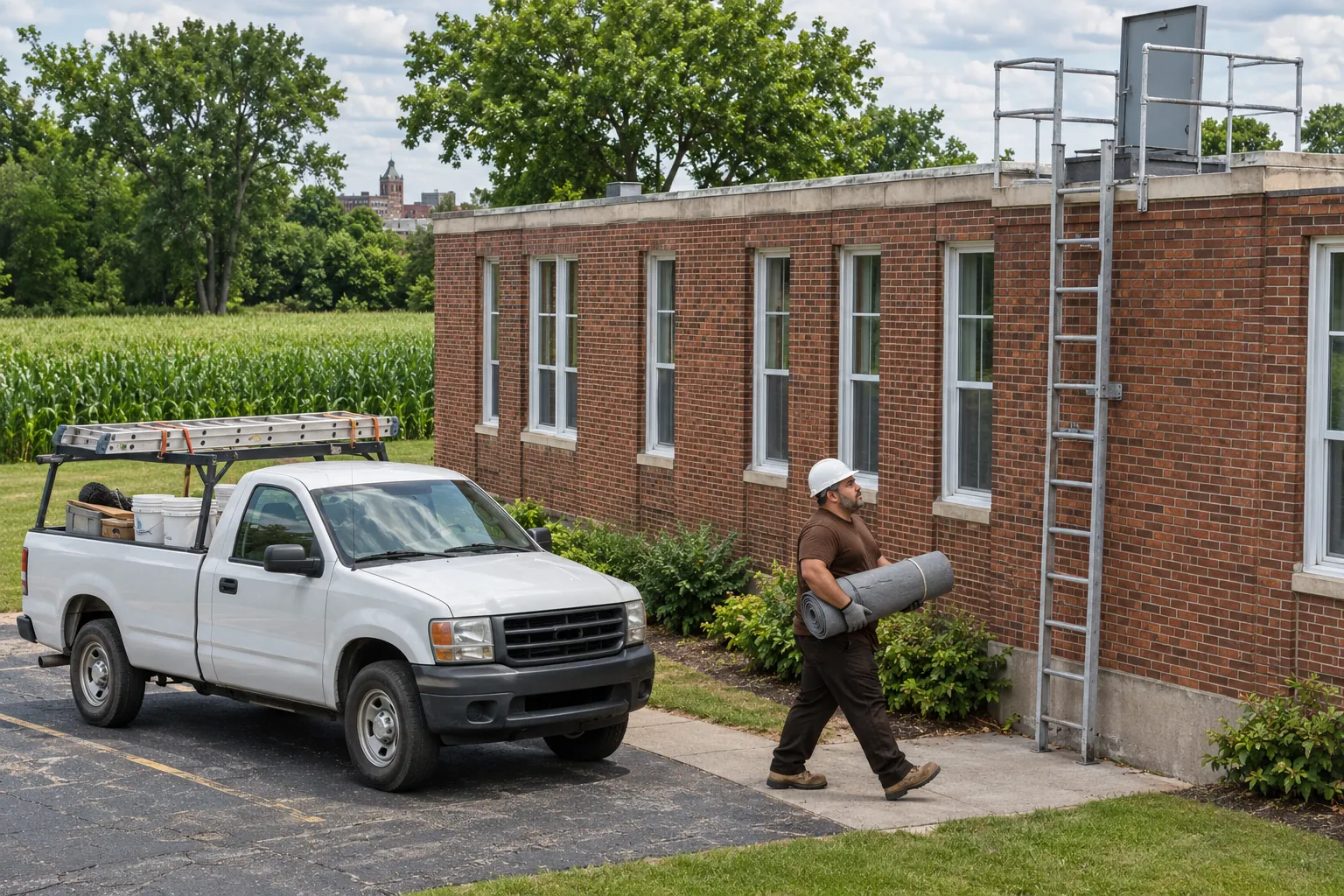
Techs carrying tools wear tracks across the membrane, leaving punctures and scuffs along the same line from the hatch to each unit.
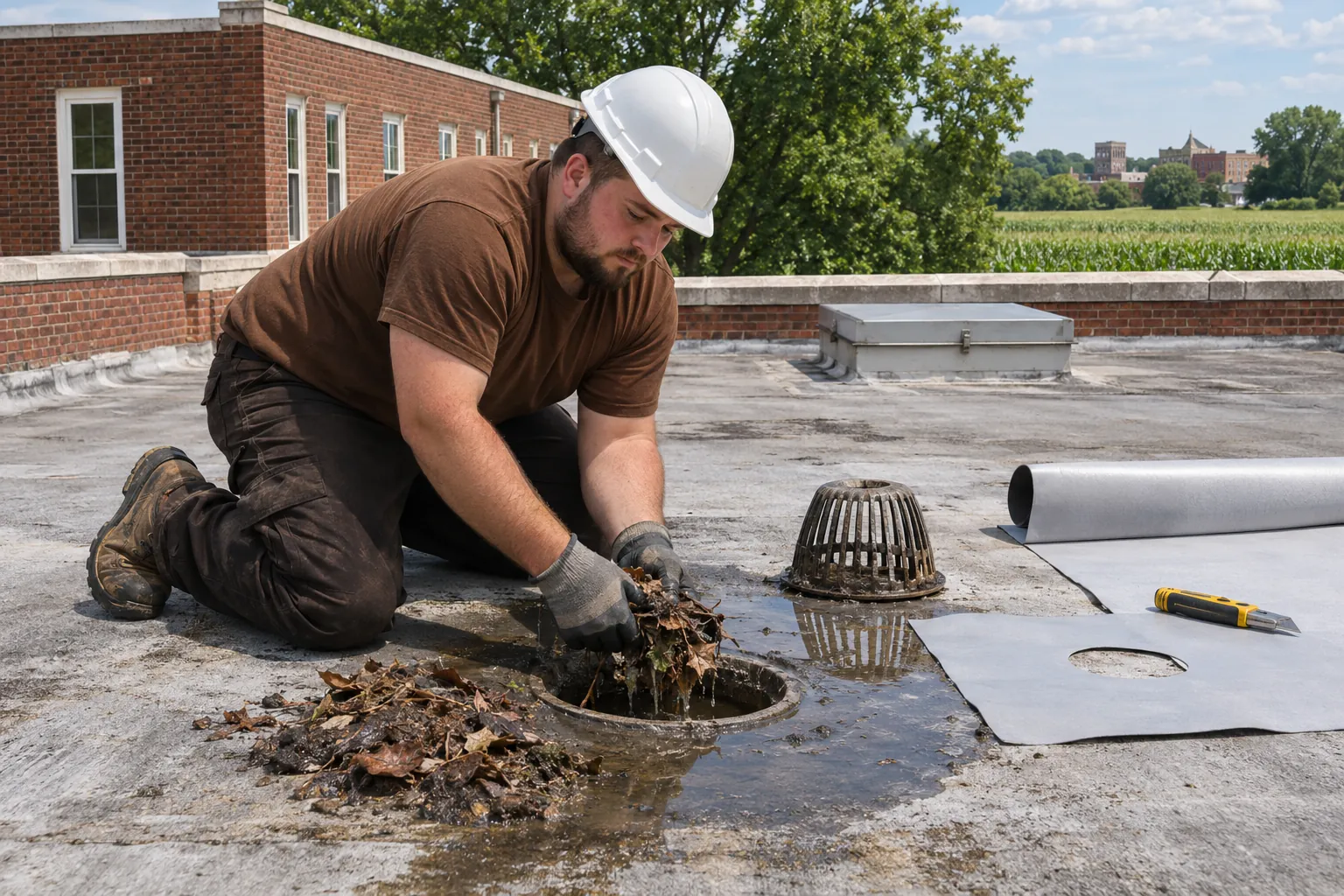
Residue and debris collect at the outlets, slowing drainage and holding water against the flashing until it works under the edge.
Steam, heat, and vibration from below work on the deck and fasteners under the insulation, loosening the roof from underneath.
Methods are chosen around the equipment on the roof and the work going on under it.
The area around the fan is cleaned, damaged membrane is replaced, and the curb is re-flashed. Heavy residue zones get a sacrificial layer or walkway.
Punctures along the service route are patched, then walkway pads set down the path so foot traffic stays off bare membrane.
A full walk covers seams, flashings, drains, curbs, edges, and equipment supports, with cores where needed and photos of each finding.
Spring and fall visits clear drains, check residue zones, and seal small defects before they reach the production floor.
Compare repairing a working plant roof in sections against replacing it.
| Roof Detail | Repair Now | Replace The Roof |
|---|---|---|
| Fan and stack curbs | Re-flash the curbs that leak | New flashing at every curb with a new roof |
| Residue-worn membrane | Replace the worn area and add protection | New membrane across the whole roof |
| Service-path damage | Patch the punctures and add walkway pads | New field membrane and new pads |
| Production below | One section at a time, sealed each day | Larger openings and longer shutdown planning |
| Planning | Ranked list lets you spread work over budgets | One large project and budget |
Tell us which line and which fan or stack sits above it. We will plan the roof walk around your shift schedule.
Plant repairs follow five steps, each one planned with the people running the floor.

Hatch, ladder, or lift access and safe paths around running equipment get set with your maintenance lead first.
Fans, curbs, paths, drains, and seams get walked, with cores where the insulation might be wet.
You receive a written list with photos, sorted by urgency, so work can be booked around production.
Each section is opened, repaired, and sealed by the end of the day while the plant keeps running.
Spring and fall checks keep residue zones and drains from turning into the next leak.
Plants mix roof systems and leak sources, so these repairs often come up together.
Office and warehouse wings beside a plant usually carry a low-slope membrane with its own seams and drains.
See flat roof repairs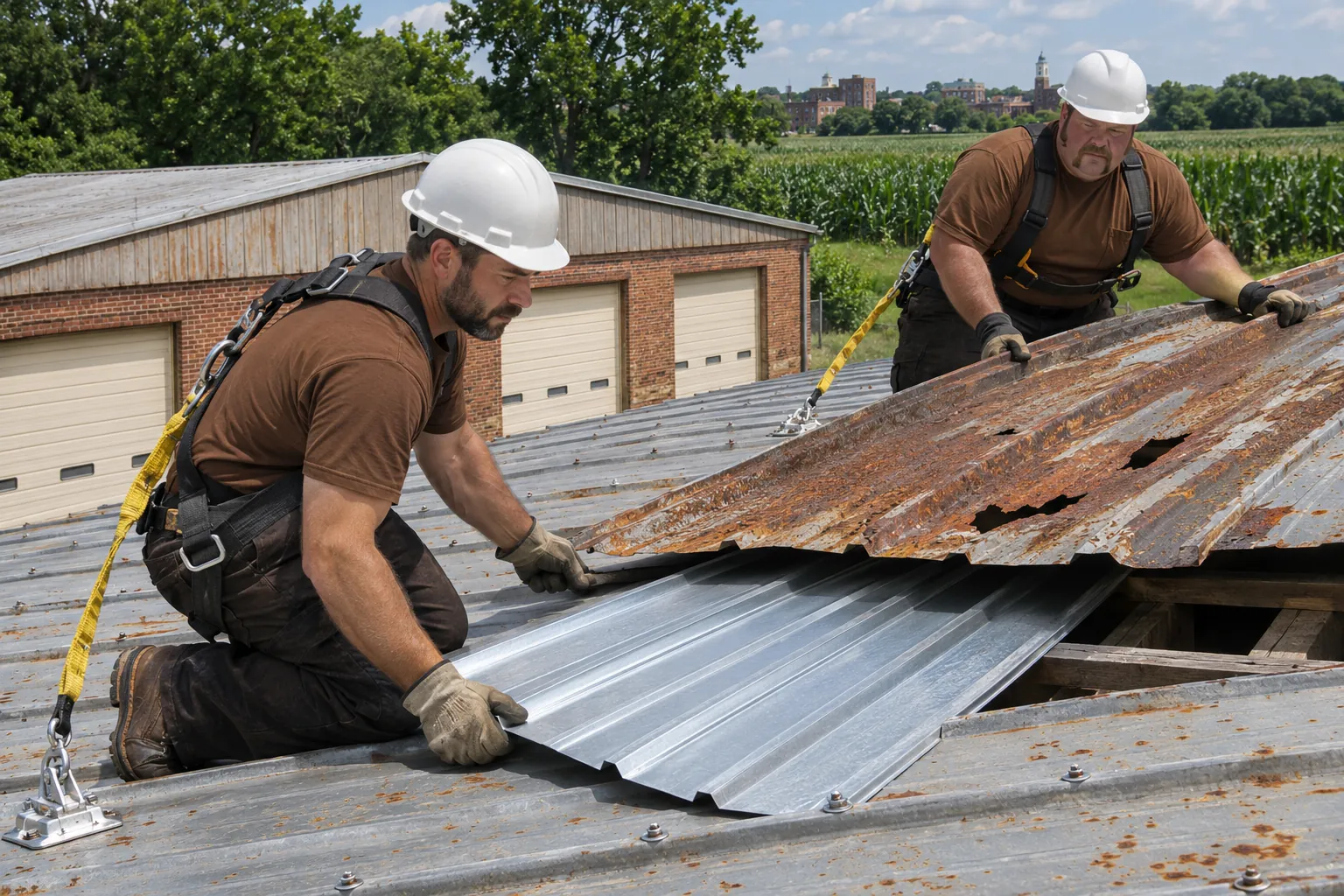
Steel production buildings leak at screw rows and laps, which take fastener and lap repairs.
See metal roof repairs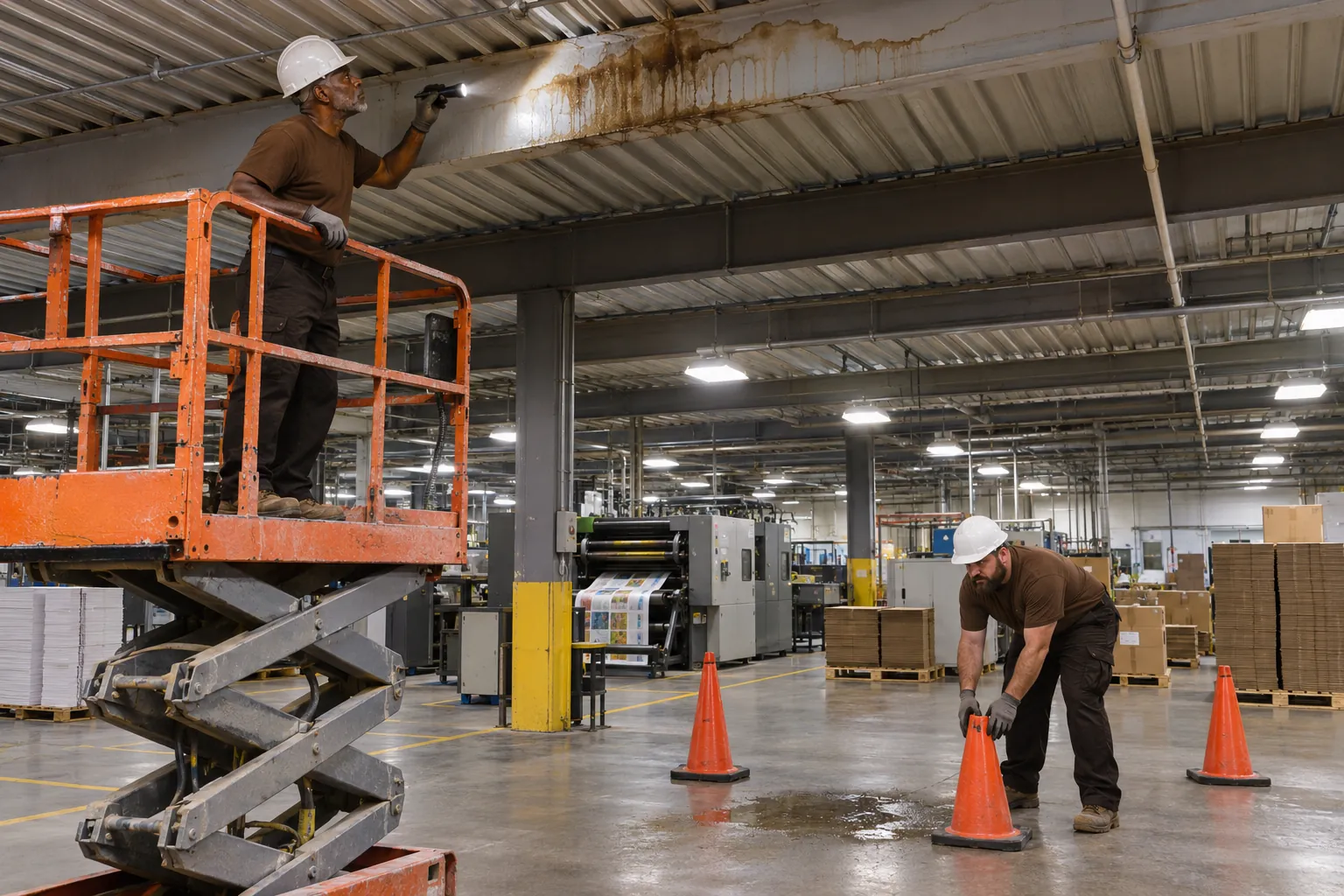
A drip over a line can travel along the deck, so tracing it first keeps the repair in the right place.
See leak tracing and repairAnswers on exhaust fans, upkeep, inspections, and price for plant roofs.
Checking the fan curb flashing, the fan housing, and the membrane around it for heat damage or residue. The area is cleaned, damaged membrane replaced, and the curb re-flashed, with added protection where residue is heavy.
Some membranes soften or stain under grease and solvent residue while others resist it. A sample from around the fan shows how far the damage reaches, and the replacement material is chosen to stand up to that exhaust.
Yes. Pads or a sacrificial layer around the fan take the residue and foot traffic, and they can be replaced later without opening the roof below.
Clearing drains, checking seams and flashings, looking at curbs and equipment supports, and sealing small defects. On food and printing plants, residue zones around exhaust get a closer look each visit.
That depends on roof size and access. Most of the time goes to the zones around equipment, where cores and photos are taken. You get the written findings after the walk, ranked by urgency.
Twice a year suits most plants, in spring and fall, plus a walk after any major storm. Roofs with heavy residue around fans earn a mid-year look at those zones as well.
Roof size and height, the amount of damage, the membrane or metal system, rooftop equipment, and work around running production. Lift or crane access and safety setups near machinery add steps.
Yes. The ranked findings list lets you fix the urgent items now and book the rest for the next budget, with each item priced on its own line.
Tell us which part of the plant is leaking and what sits on the roof above it. We will plan the walk around your shifts.