Roof Hatches
Hatch curbs rust at the corners and gaskets flatten, so the access point itself is a common leak.
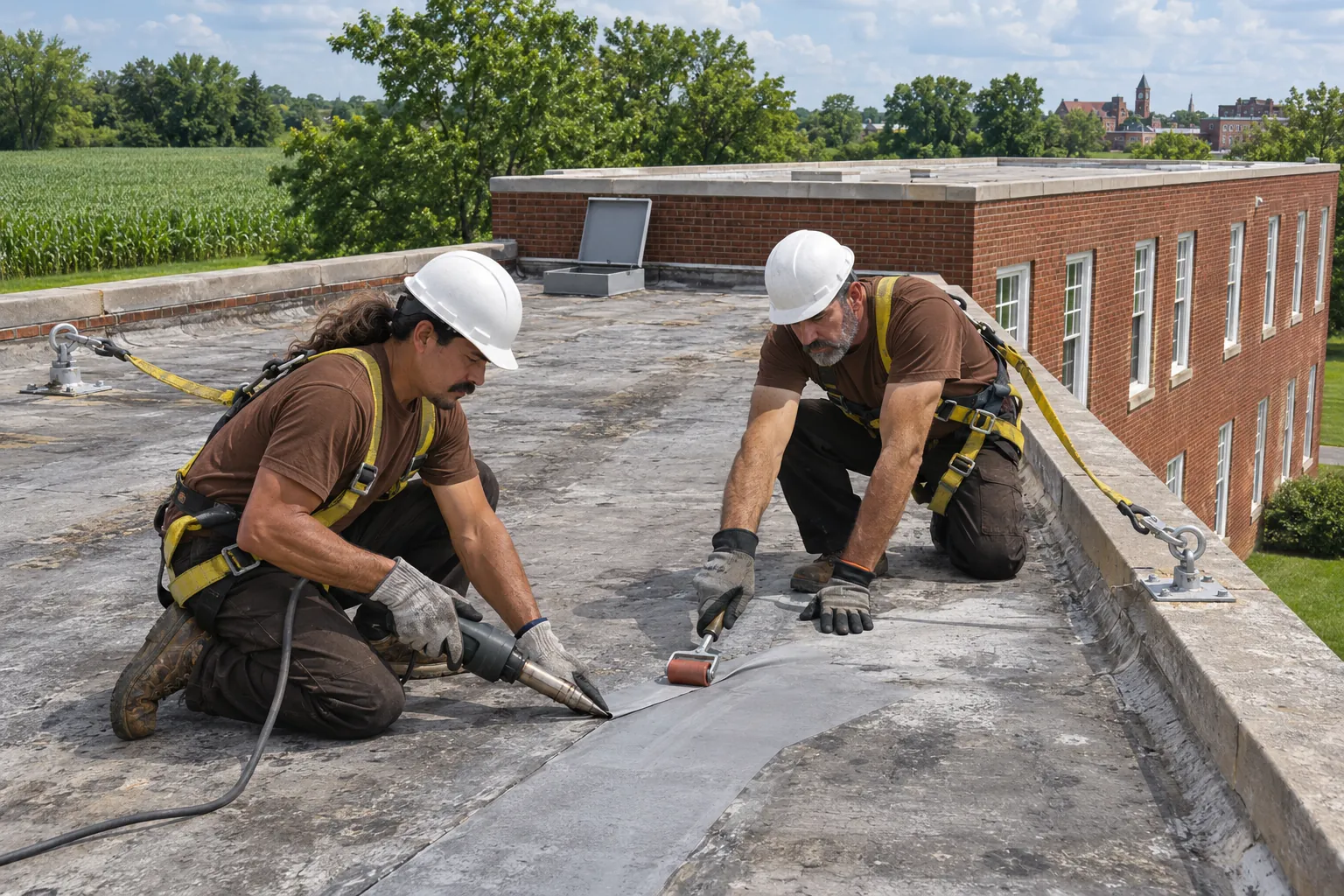
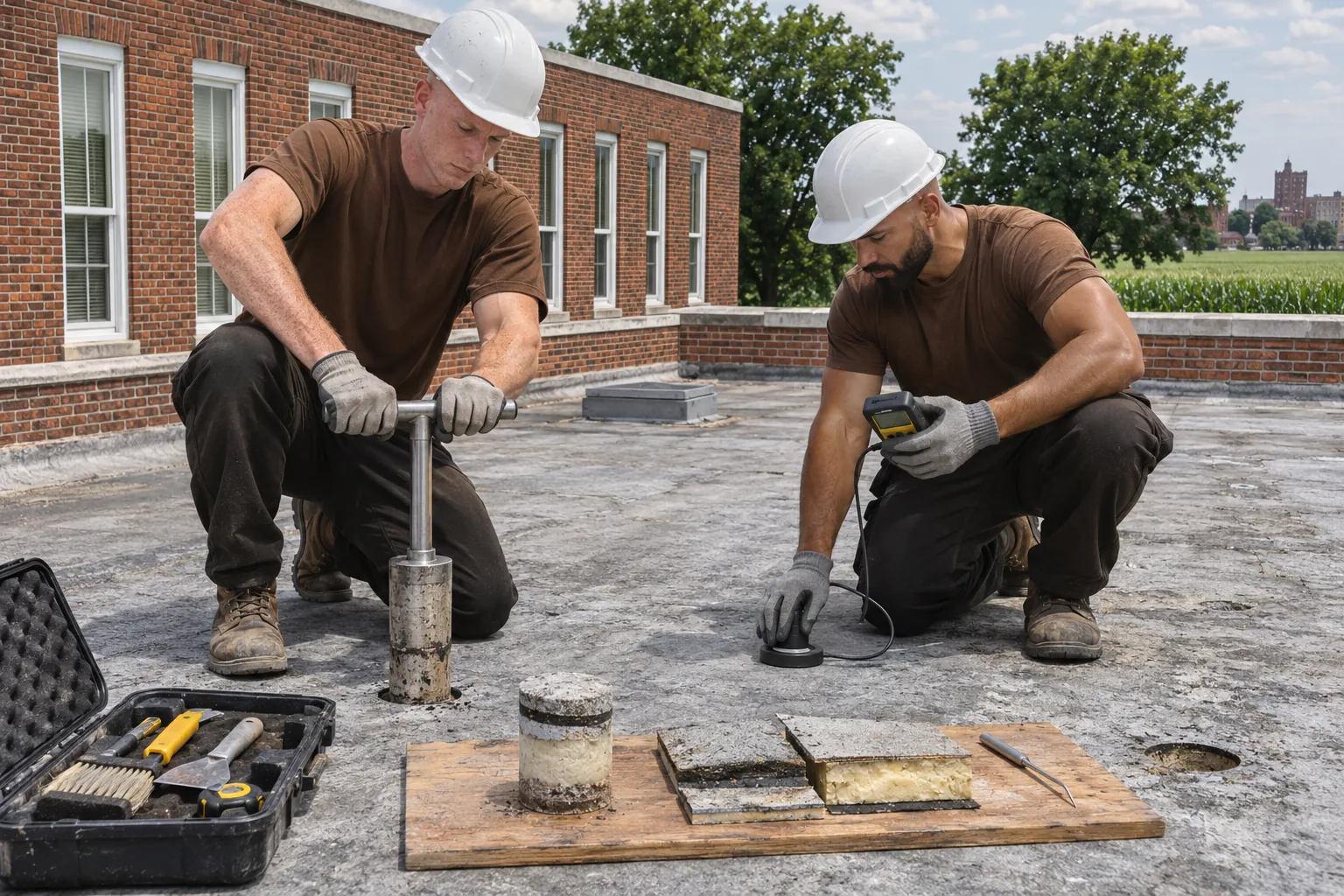
Clinton commercial roof repair often starts with getting up there. We plan hatch, ladder, or lift access, then repair curbs, seams, and panels.
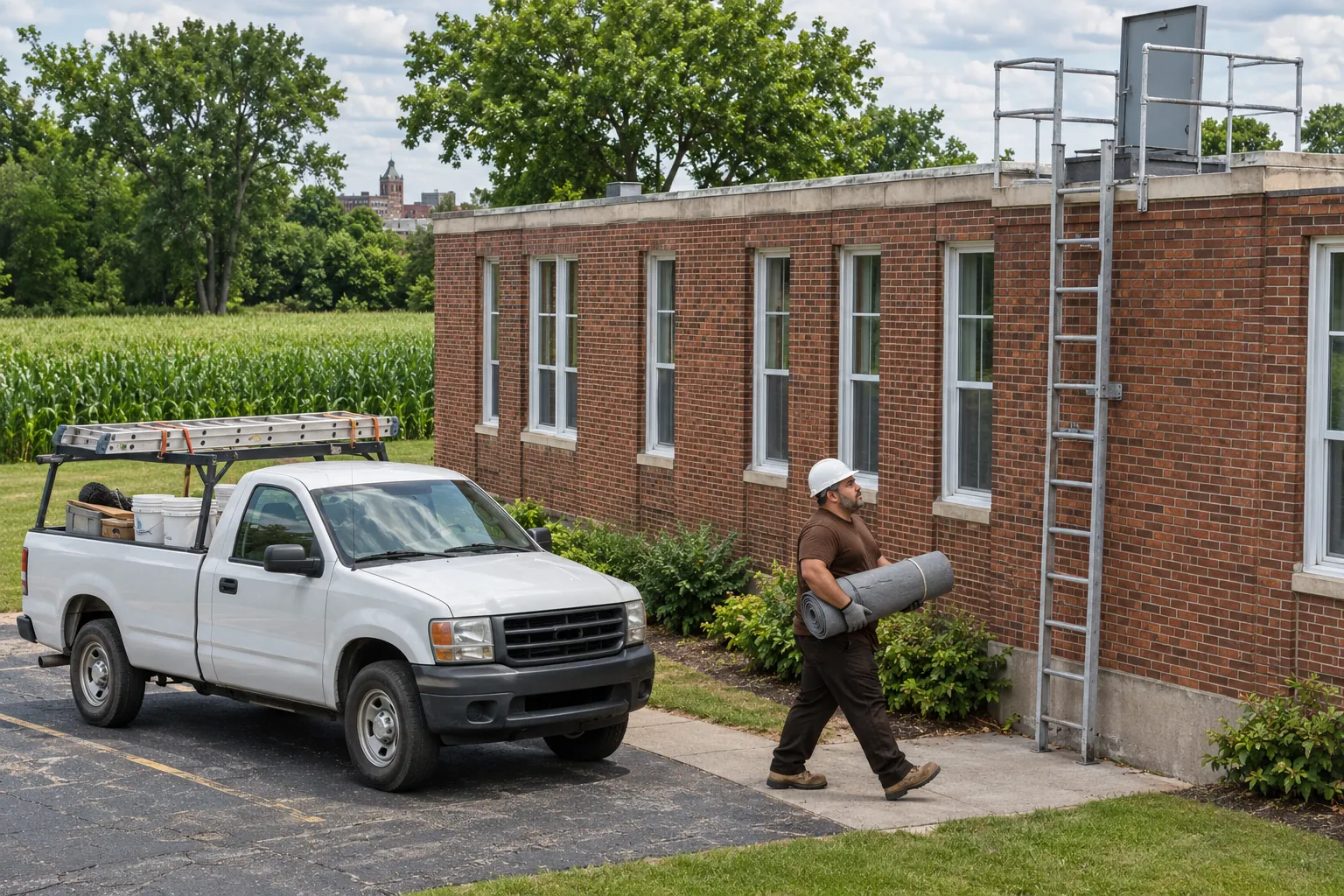
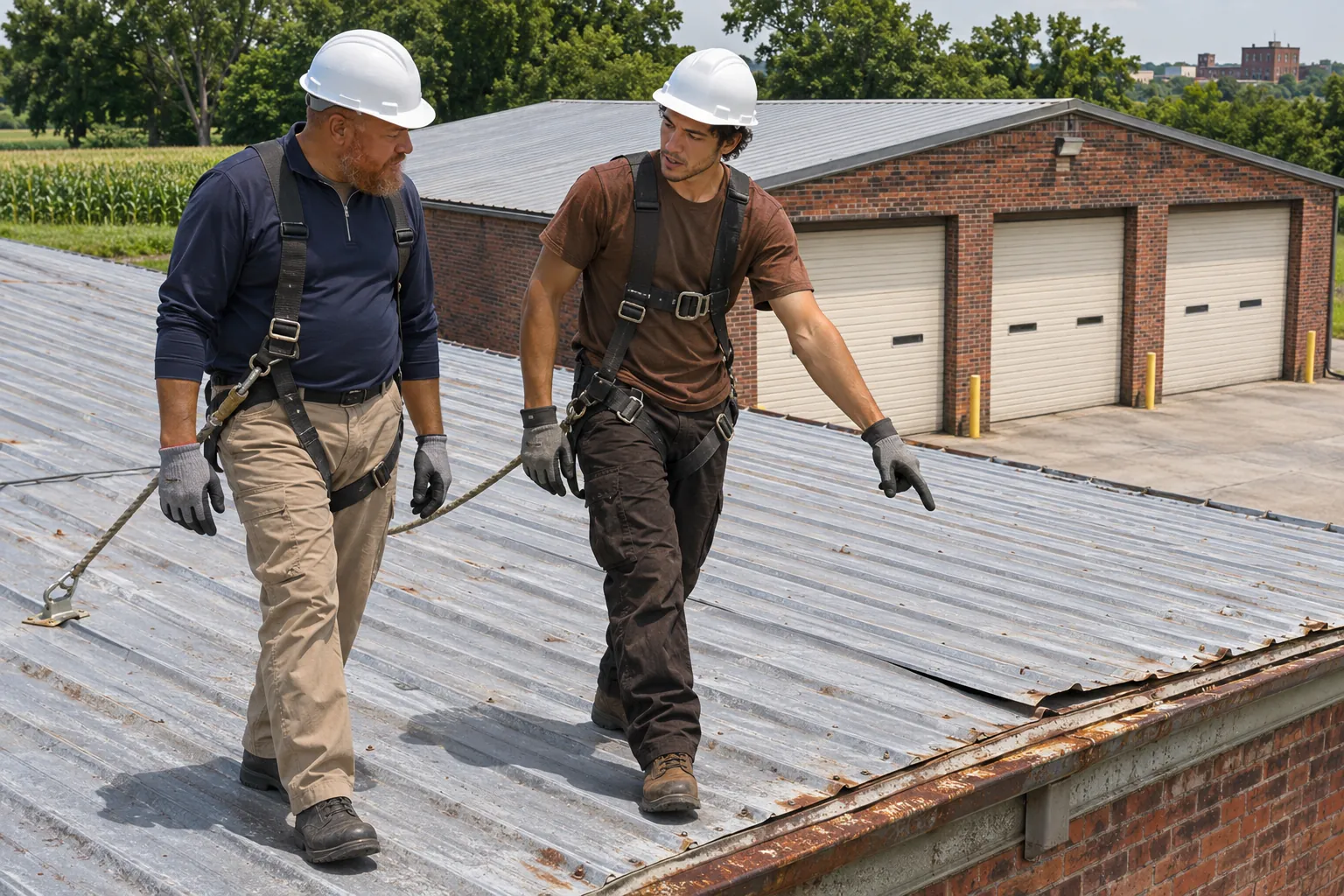
Our Clinton commercial roof repair visits on taller plant and shop buildings begin with how people and material reach the roof safely.
Some roofs here sit well above the parking lot, with a single interior hatch or a fixed ladder on a back wall. Membrane rolls, panels, and tools all have to travel that route.
We walk the access with your maintenance lead, pick where a lift can stand, and keep material away from doors and truck lanes.
Taller plant roofs carry equipment and see few visitors. These five zones get checked first.
Hatch curbs rust at the corners and gaskets flatten, so the access point itself is a common leak.
Rooftop units and fans sit on curbs whose flashing splits where service techs kneel and step.
Long runs of low-slope membrane open at laps where heat and cold work them each season.
Where a metal roof meets a taller wall, trim and closures loosen and let wind-driven rain in.
Spring storms dent metal and bruise membrane, and the damage is hard to see from the ground.
On a tall building, access cost weighs on every choice. Compare repair and replacement row by row.
| Roof Detail | Repair Now | Replace The Roof |
|---|---|---|
| Leaking hatch | Reflash the curb and replace the gasket | New hatch set in a new roof |
| Split curb flashing | Rebuild flashing on the curbs that leak | New flashing at every curb |
| Hail damage | Repair bruised areas confirmed by cores | Full replacement when bruising is roof-wide |
| Material lifting | A few lifts of material for one area | Many loads and longer lift rental |
| Plant operations | Work around shifts in one zone | Longer planning around every zone |
Clinton buildings range from steel shops to low-slope plants. Pick a roof type to see the repairs.
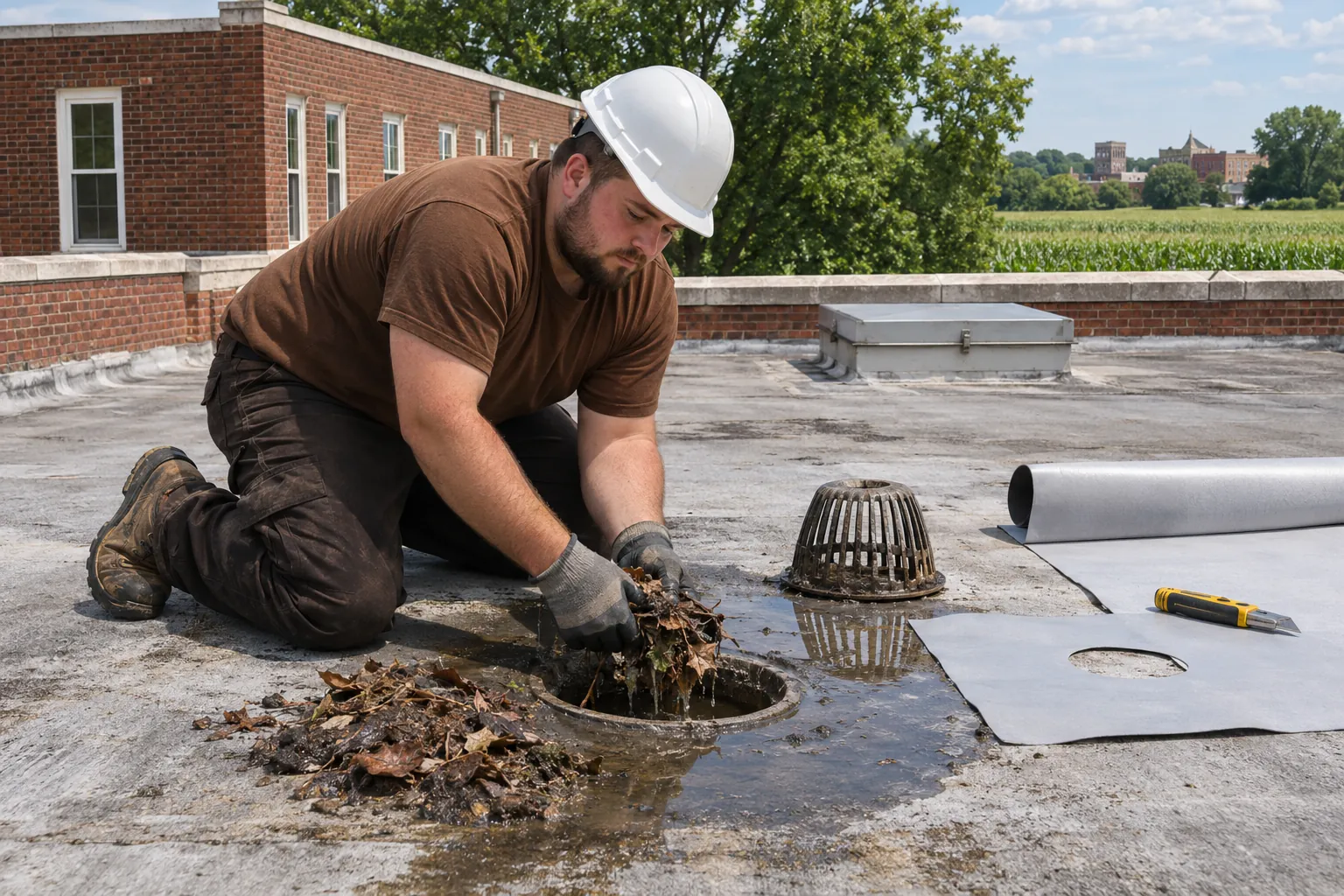
Low-slope plant and office roofs with long membrane runs, curbs, and a few large drains.
Typical Repairs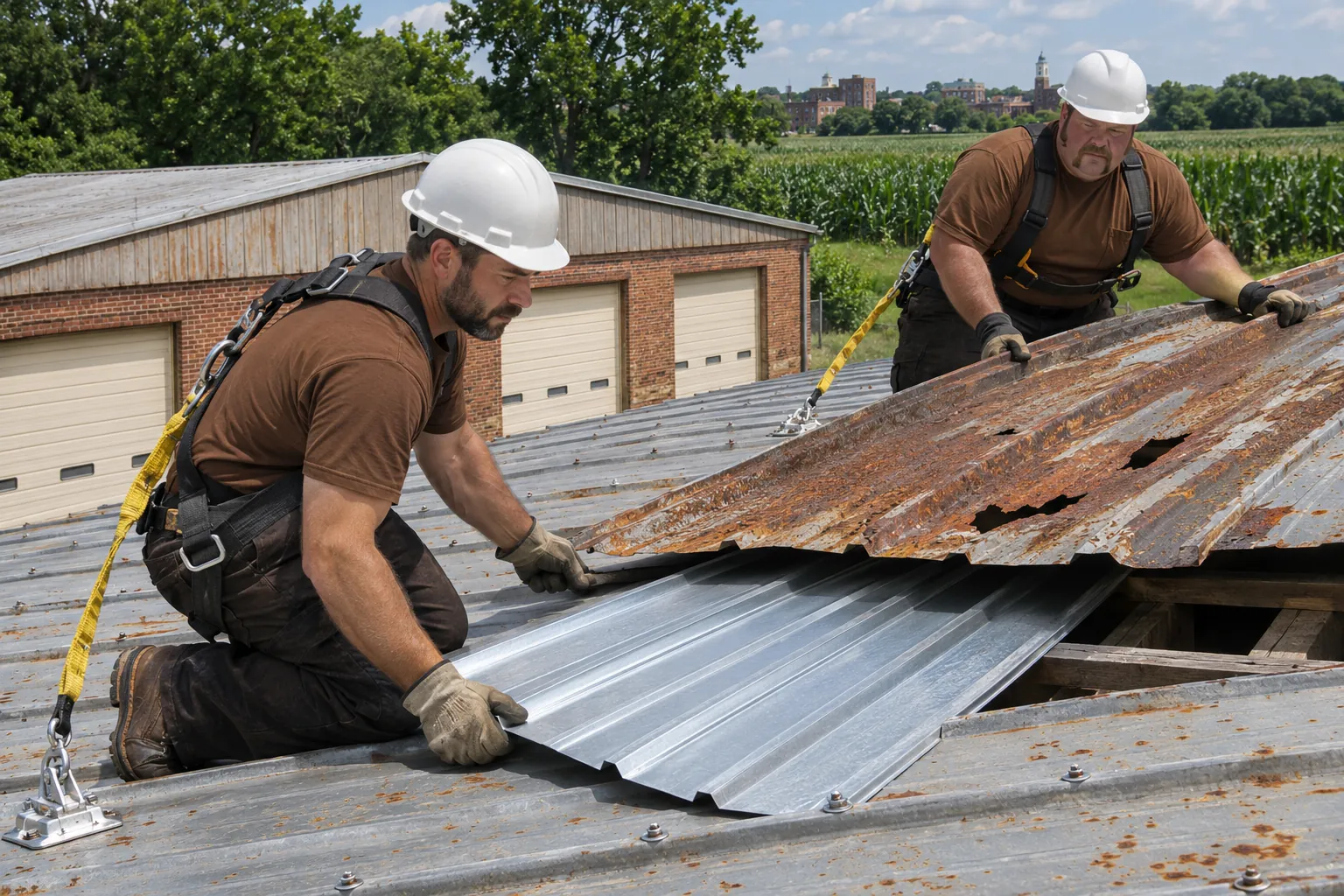
Metal plant and shop roofs where screws, laps, and wall-to-roof trim let water in.
Typical Repairs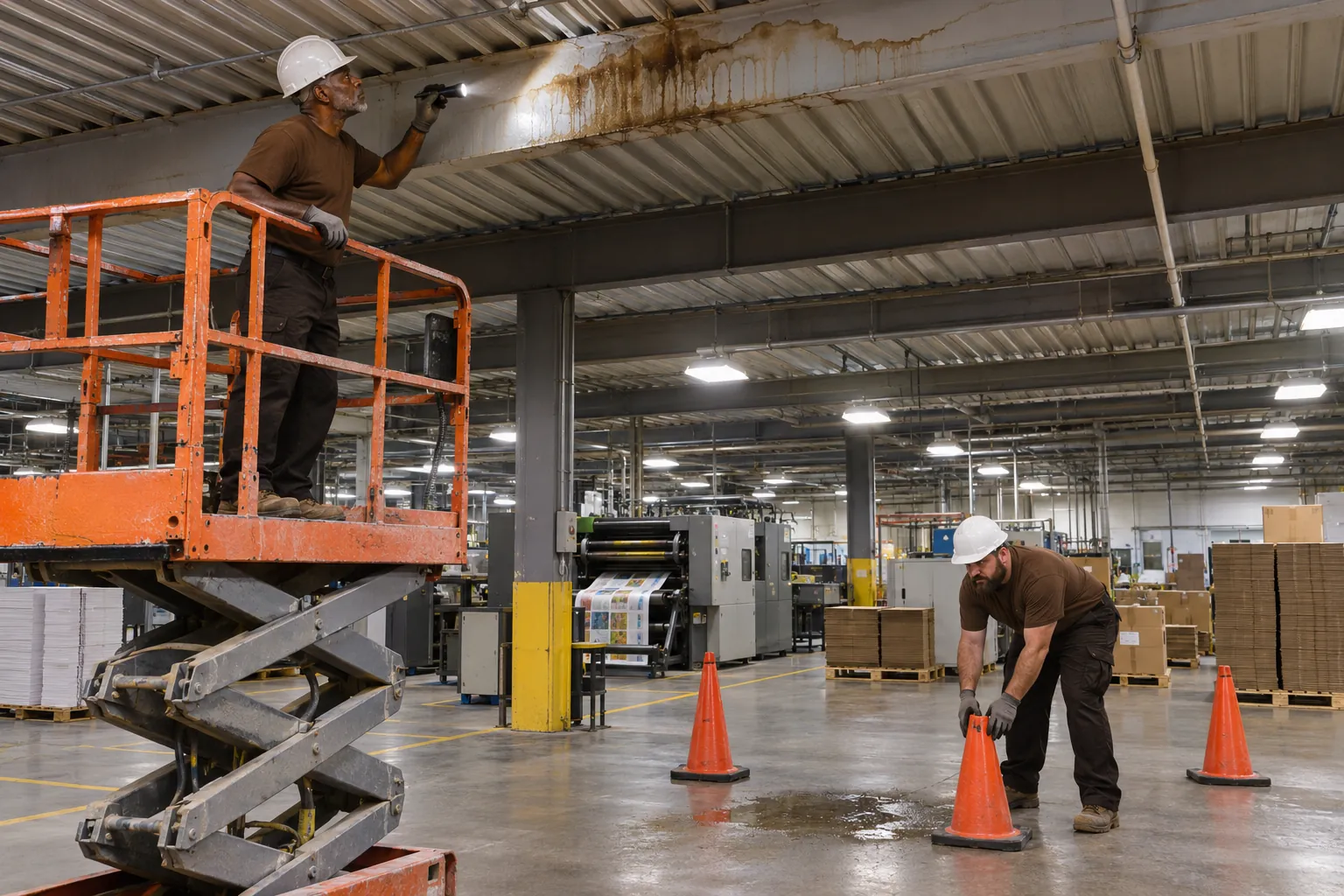
Drips over equipment or aisles traced from inside so the hatch and curb nearby get checked first.
Typical Repairs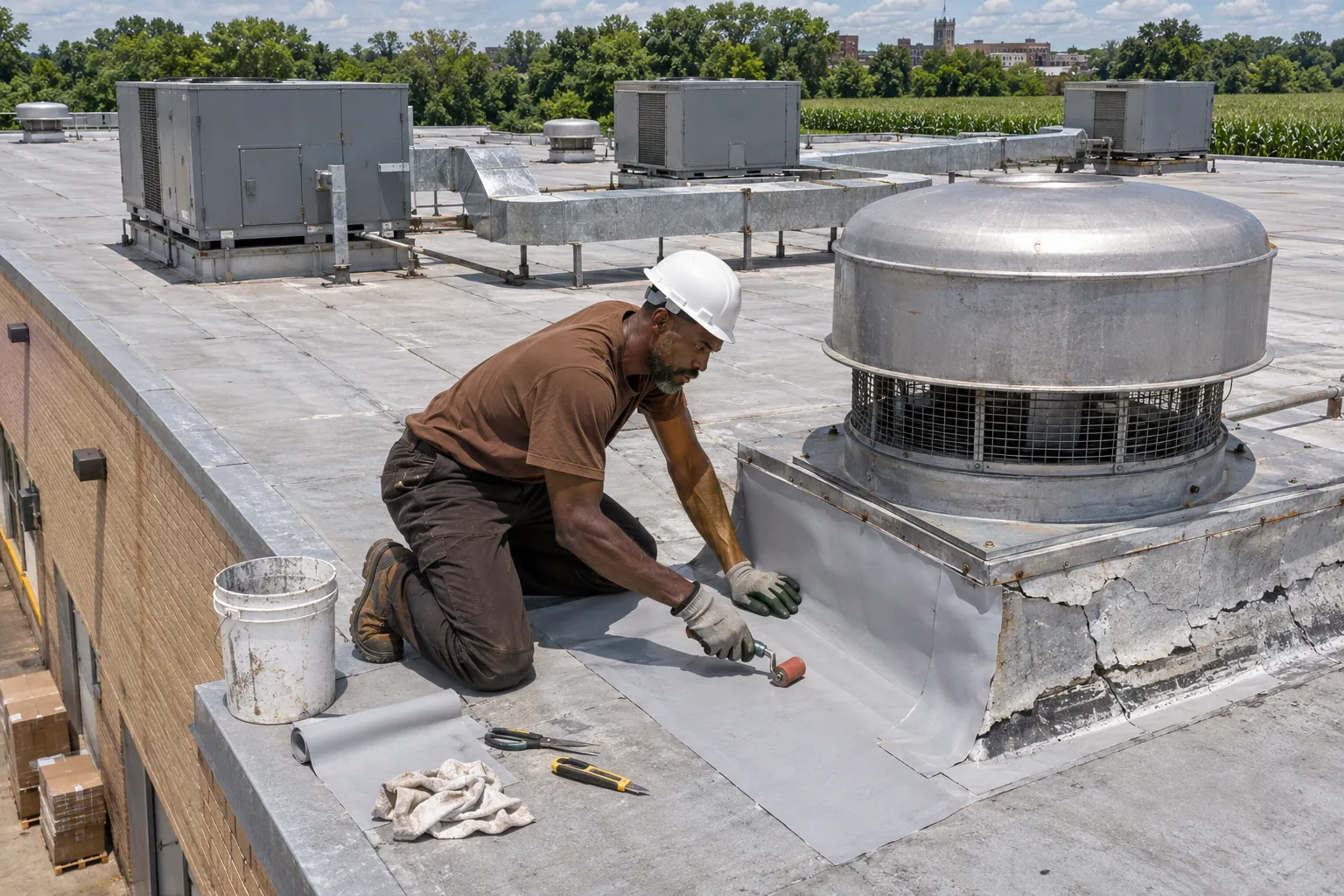
Plants with fans, stacks, and units on the roof, repaired around shifts and machinery below.
Typical RepairsCall with the address and how the roof is reached today. Access gets planned before anyone carries material up.
Five steps take a Clinton plant repair from the access plan to the finished seal.
Hatch, ladder, or lift is chosen with your maintenance lead, along with a drop spot for material.
Hatches, curbs, laps, and wall joints near the leak are checked, with cores if hail is suspected.
Findings come back with photos and a repair price, including the access plan.
Noisy or odorous steps are booked between shifts, and each area is sealed by day end.
Before leaving, the hatch gasket and curb get a final look so the access point stays dry.
Our commercial roof repair area covers Clinton, Terre Haute, and four other towns. Anywhere else in Vermillion County, please call us or send us a message.
| Town | County | What We See On Roofs There |
|---|---|---|
| Terre Haute Home Base | Vigo County | Plant, warehouse, and storefront roofs with crowded curbs and old patches |
| Brazil | Clay County | Metal shops and pole buildings with worn screws and end laps |
| Linton | Greene County | Roofs owned from out of town, repaired with a photo report |
| Pittsboro | Hendricks County | Big single-ply warehouse roofs punctured by foot traffic |
| Sullivan | Sullivan County | Small retail and shop roofs with skylights and old hatches |
Answers for plant and shop owners in Clinton.
Industrial and commercial buildings in Clinton, including metal buildings and low-slope plants, are part of our repair work. Work is scheduled around shifts, and equipment curbs are checked and re-flashed with each repair.
Roof height and access, the size of the damaged area, the roof system, and equipment on the roof. Lift time and safety setups near machinery add steps, so the access plan is priced with the repair.
A lift or small crane sets material on the roof from a spot away from truck lanes and doors. Where only a hatch is available, smaller loads go up by hand on a rope line.
Dented metal, cracked or bruised membrane, damaged flashing, and broken skylights or vents. Much of it is hard to see from the ground, so we walk the roof, photograph damage, and core suspected bruises.
Many hail hits only need repairs: dented trim, cracked skylights, and bruised membrane in a few spots. Cores show whether bruising reached the insulation, and that decides between a repair and a larger claim.
Yes. We cover Clinton from Terre Haute and plan hatch, ladder, or lift access as part of every repair estimate.
Hatch leaks come from flattened gaskets, rusted corners, and split curb flashing. The gasket gets replaced, the corners patched or the hatch reset, and the curb re-flashed into the roof.
Tell us how the roof is reached and where it leaks. We will plan the access, find the opening, and price the fix.