Parapet Base Flashing
Membrane turned up a wall loses its grip where the termination bar loosens. Water then drops behind the flashing and runs out at the deck.
We are a Terre Haute flat roof repair contractor for single-ply and built-up roofs. Seams, drains, and blisters get fixed where water gets in.
Terre Haute flat roof repair works best on a membrane that still bends and holds a weld. These signs show which side your roof sits on.
A low-slope roof leaks at its joints and its low points. These are the five zones we check before pricing a flat roof repair.
Membrane turned up a wall loses its grip where the termination bar loosens. Water then drops behind the flashing and runs out at the deck.
Heat-welded TPO seams and taped EPDM laps open at T-joints first. A probe along each run near a leak shows where the bond let go.
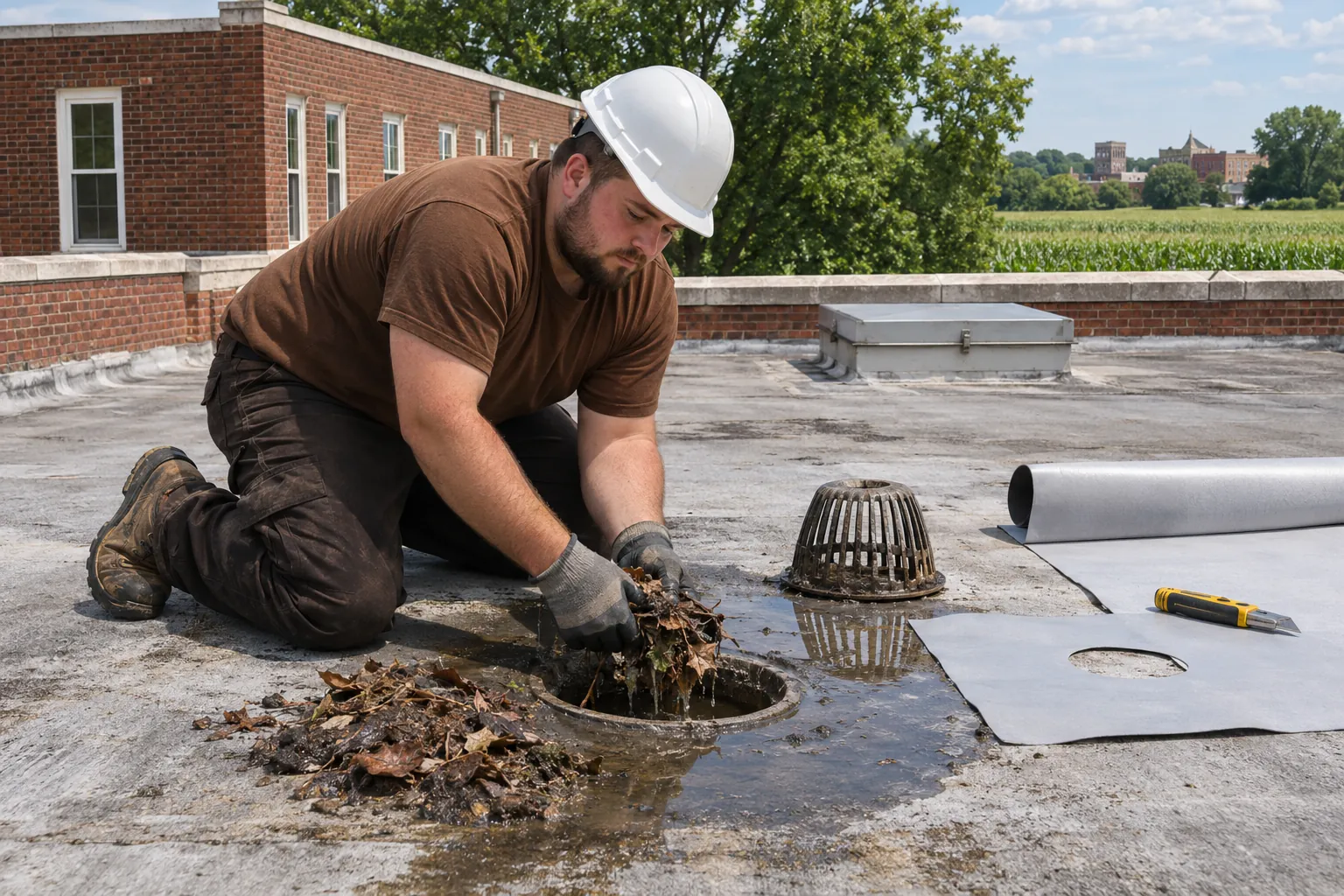
Clamping rings work loose and strainers clog with leaves and gravel. Water held at the bowl presses into any tear in the flashing.
Crushed insulation and sagging deck sections leave rings of dirt where water sat. Those areas age faster than the rest of the field.
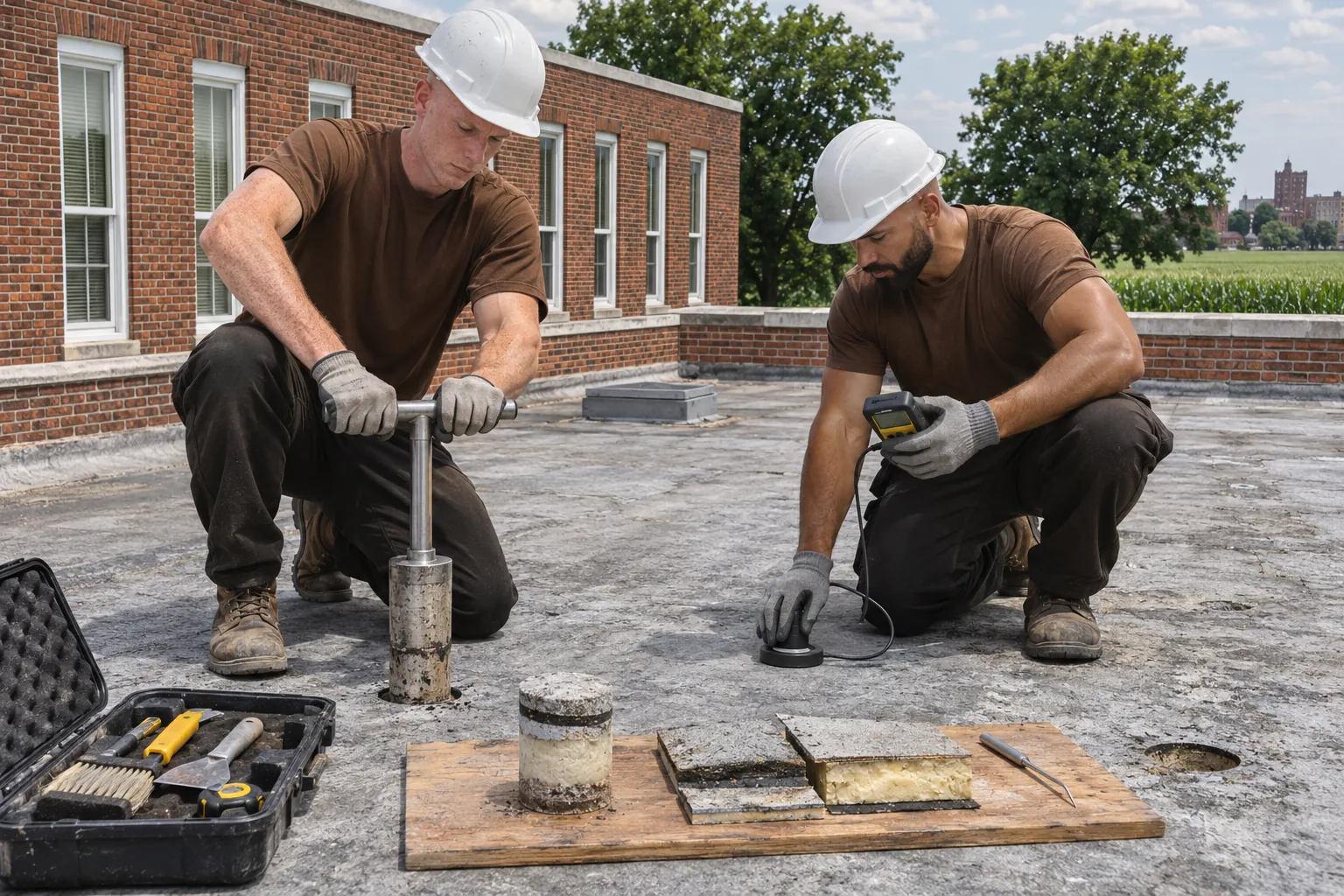
Trapped moisture lifts built-up and modified layers into blisters. A core cut tells us if the board under a blister is wet.
Each repair matches the membrane already on the roof, so the patch bonds to it and moves with it.
Clearing or lowering the drain comes first. Where the deck or insulation has sunk, a tapered cricket sends water back toward the outlet.
Loose rings get reset, broken strainers replaced, and the membrane around the bowl re-flashed so water drains without lifting the edge.
TPO and PVC take a heat-welded patch, EPDM takes primed seam tape and cover strip, and modified bitumen takes a torched or cold-applied ply.
Boards that read wet are cut out to dry board, replaced, and covered with new membrane tied into the old at every edge.
Compare a targeted flat roof repair with a full tear-off for each part of the roof.
| Roof Detail | Repair Now | Replace The Roof |
|---|---|---|
| Split seam | Weld or tape a cover strip over the open run | New membrane across the whole roof |
| Ponding at a drain | Reset the bowl and add a cricket around it | Tapered insulation drawn for every drain |
| Blistered area | Cut, dry, and patch the blistered plies | Strip all plies down to the deck |
| Wet insulation | Replace only the boards that read wet | Replace all insulation under the field |
| Time on the roof | Usually one or a few visits per area | Weeks of staging and tear-off |
Water that sits for days after rain points to a drain or a low spot. We check both and price the fix in writing.
A flat roof repair runs in five steps, from the first probe to the drain flush that checks the work.
Each lap near the reported leak is probed with a hook so open bonds show before any patch goes down.
Small core cuts beside the leak tell us whether the boards are dry and how far any wet area reaches.
Torn membrane and wet boards come out back to dry, solid material on every side of the opening.
New membrane matching the old is welded, taped, or torched in, with fresh flashing at walls and drains.
Water run through each repaired drain shows that it empties and that the new flashing stays tight.
Flat roofs share buildings with metal sections, rooftop units, and leaks that start far from the stain.
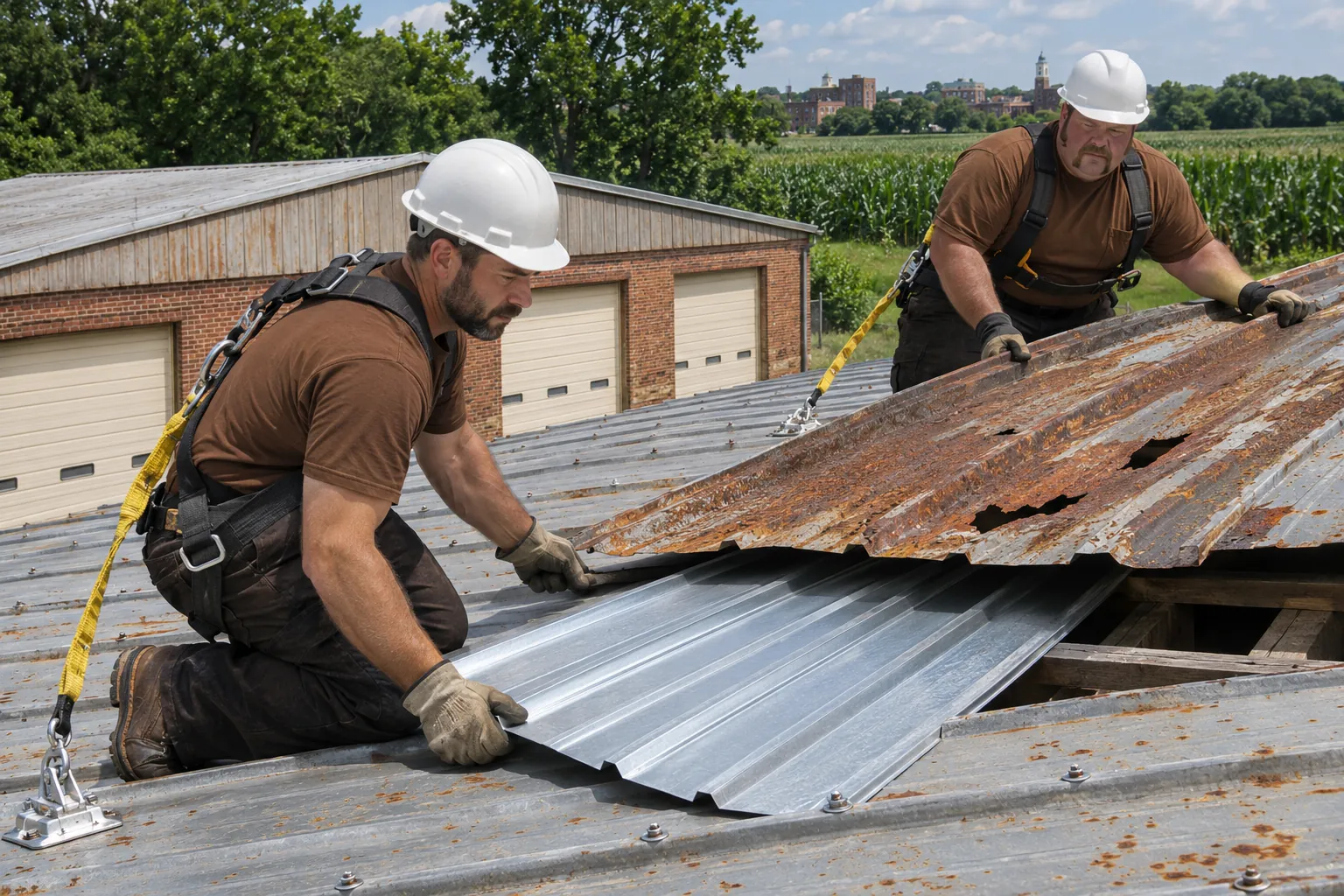
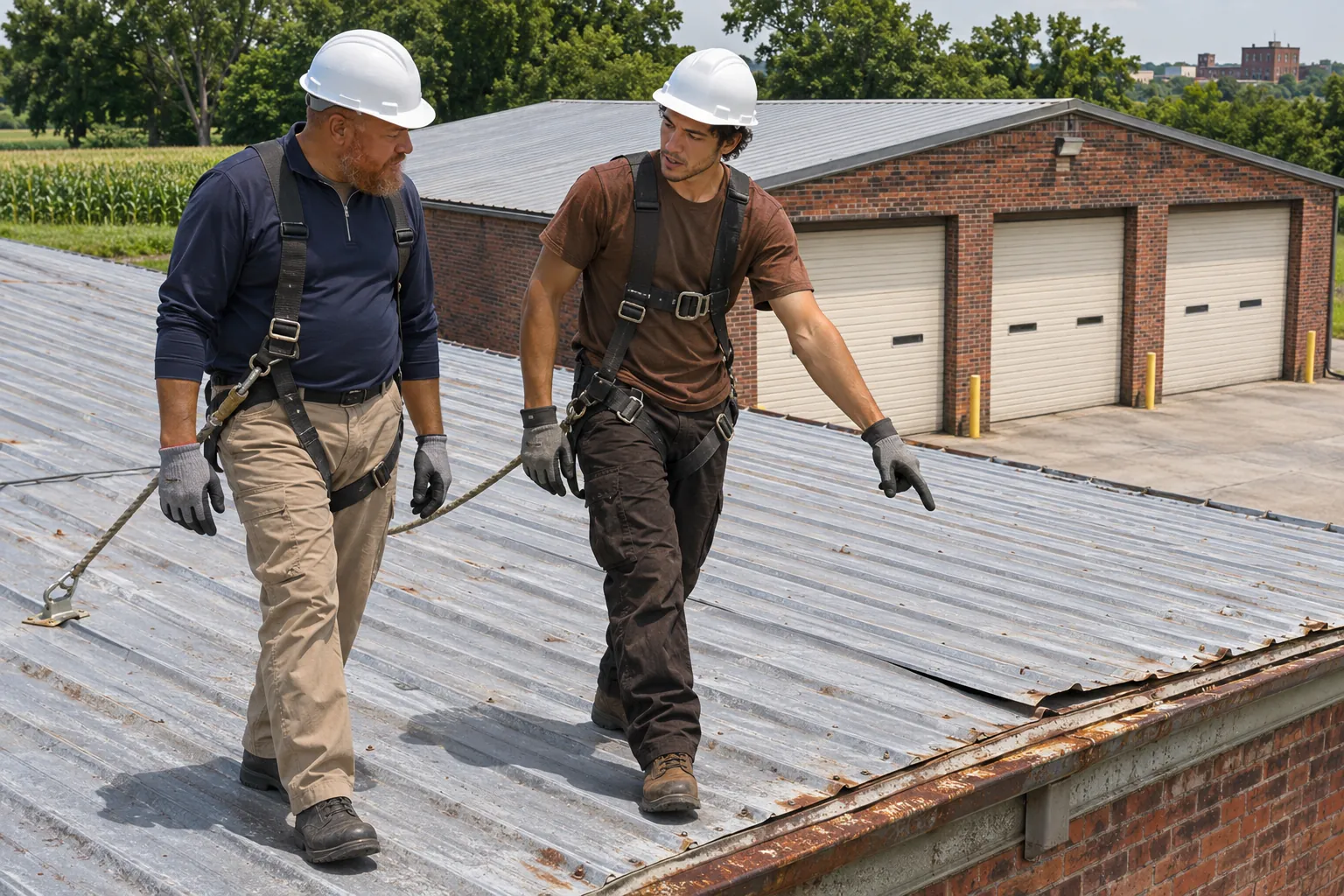
Many plants pair a flat office roof with a metal shop roof. Laps and screws on the metal side get their own repair.
See metal roof repairs
If the stain inside sits far from any seam you can see, leak tracing finds the opening before the patch.
See leak tracing and repair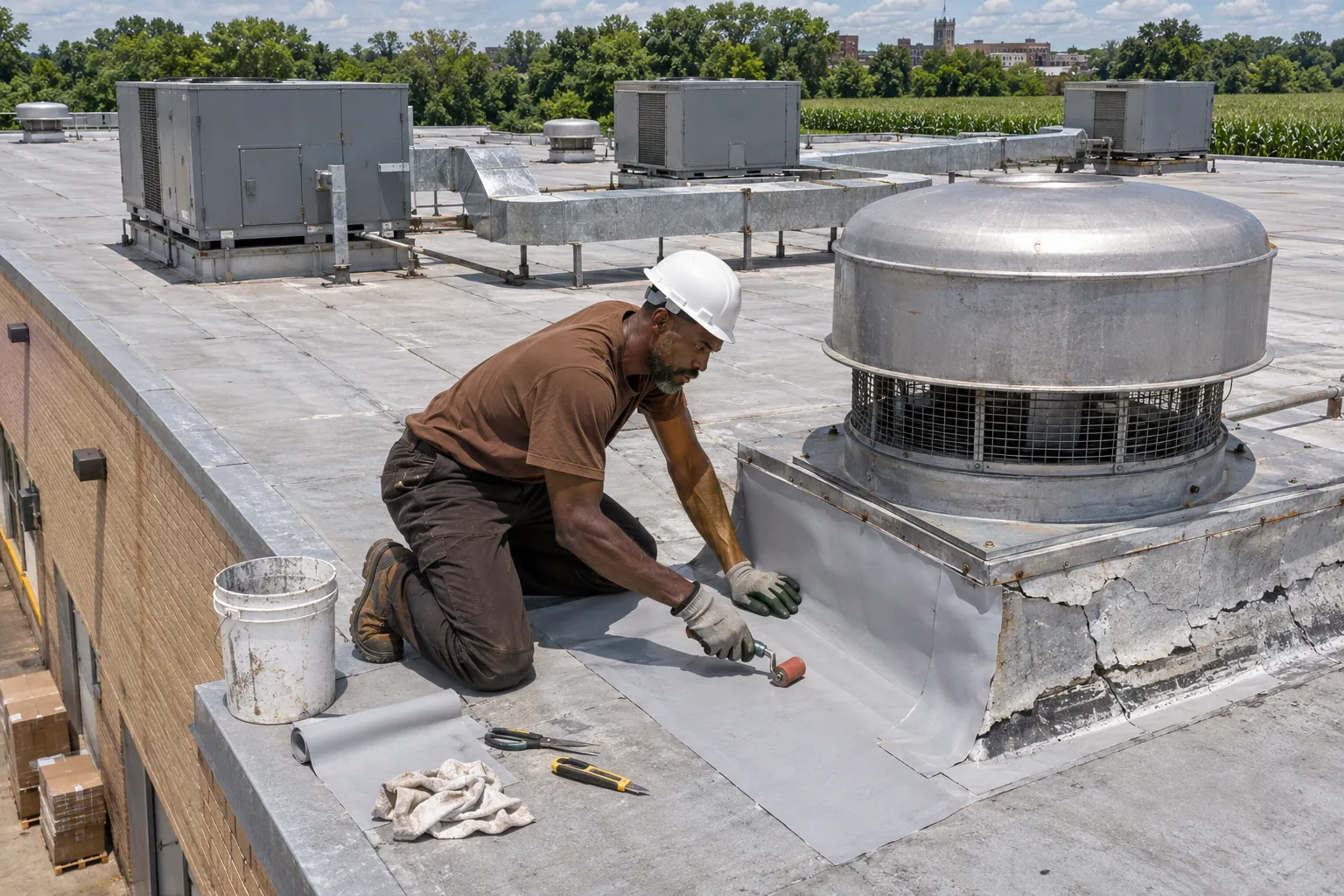
Flat roofs on plants carry fans and stacks, so repairs there are planned around shifts and residue.
See plant roof repairsAnswers on patches, ponding, drains, and price for low-slope roofs.
A patch fits isolated punctures, one split seam, or a failed flashing on a roof that still flexes. Replacement fits when patches keep multiplying, the membrane turns brittle or shrinks, or cores find wet insulation across large areas.
There is no fixed count. What matters is whether the membrane between patches is still sound and whether new leaks keep appearing. When patching becomes a monthly job, the field has reached the end of its life.
Water that stays more than a couple of days after rain wears the membrane faster and adds weight to the deck. We look for a clogged or high drain, sagging deck, or crushed insulation and fix the cause, then the leak.
Clearing the outlet, then checking the clamping ring, the strainer, and the flashing around the bowl. Loose rings get reset, torn flashing gets replaced, and a sunken area around the drain gets built back up.
Area size, membrane type, how much wet insulation comes out, and any drain or deck work set the price. Roof access and bad-weather work add steps. A free on-site estimate looks at the actual damage before a number is given.
Pricing one leak only needs the area around it. A whole-roof walk catches the next weak seam and lets you plan repairs in order, so we offer both and let you choose.
Some repairs can: heat-welded TPO and taped EPDM patches go down in cold weather on a dry surface. Adhesives and sealants that need warmth wait for a mild stretch, with a temporary seal in between.
Tell us where water stands or drips on your low-slope roof. We will probe the seams, check the drains, and price the repair.