Screw Rows
Washers dry out and screws back out as panels expand in summer and shrink in winter. Each loose screw leaves a small hole at the top of a rib.
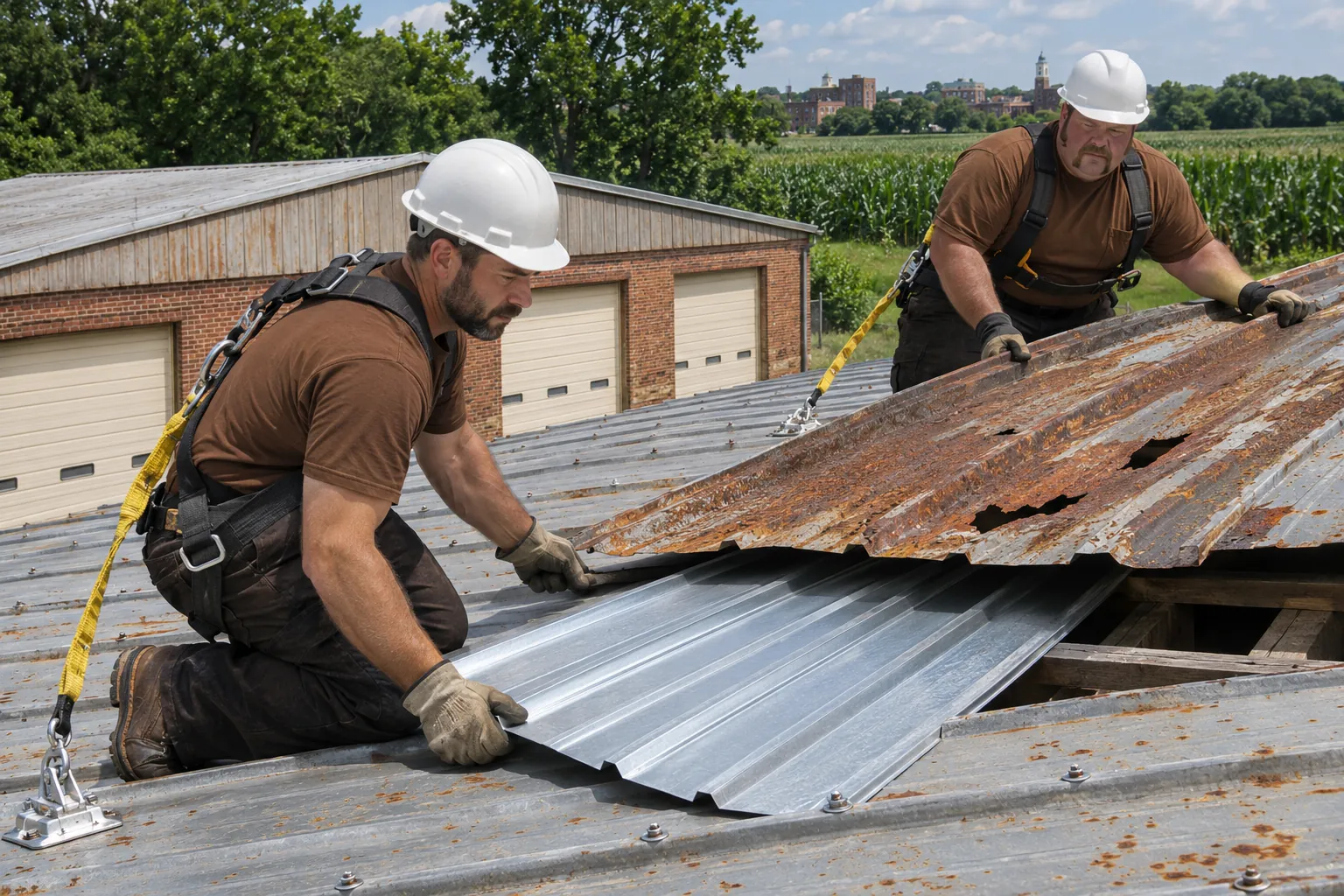
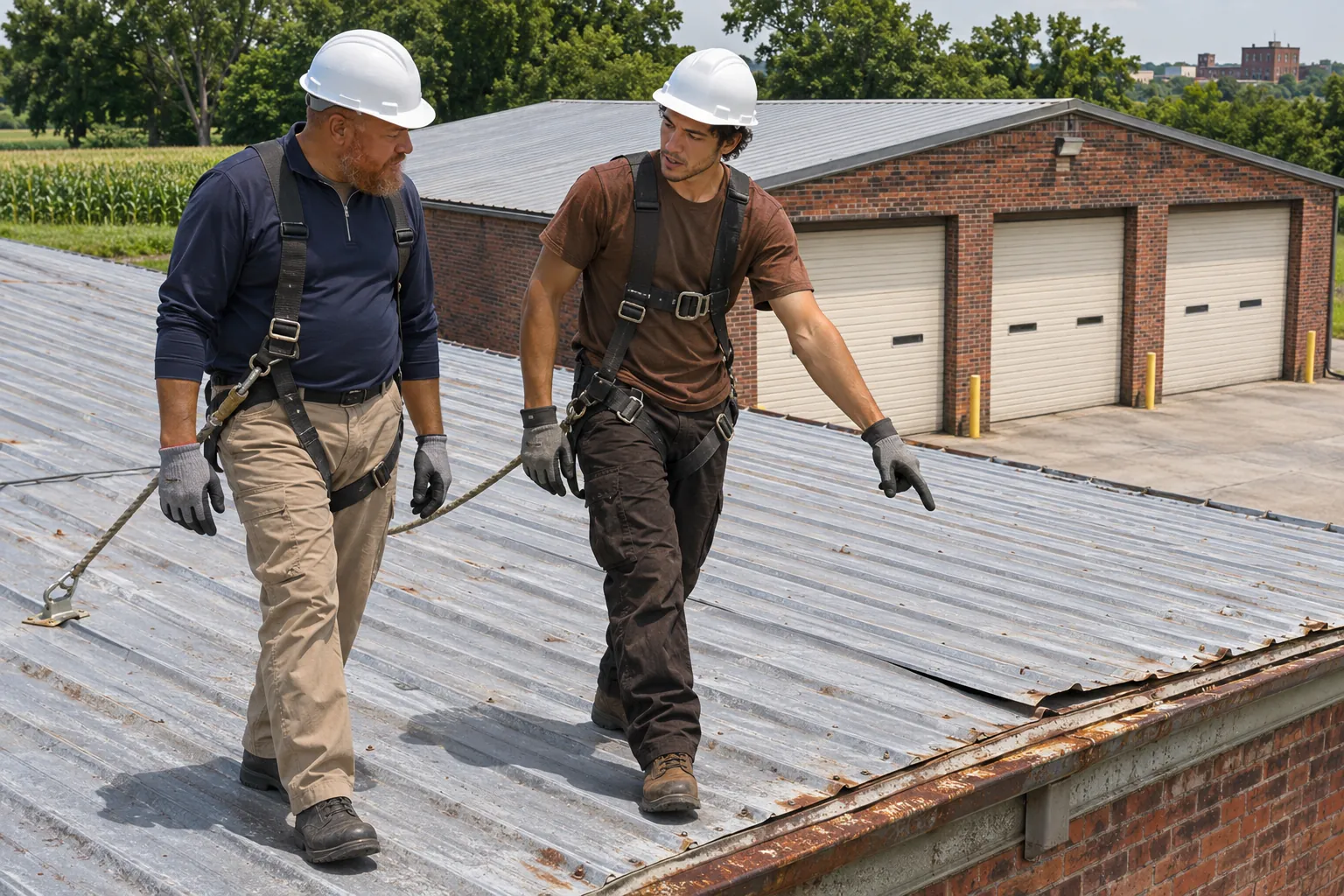
Our Terre Haute commercial metal roof repair work covers leaking screws, opened laps, and rusted panels on steel buildings. Estimates are free.
Terre Haute commercial metal roof repair holds when the steel and framing are solid. These signs sort a repair from a new metal roof.
Metal roofs leak where panels meet, where screws pass through, and where trim closes the edges. We check these five zones first.
Washers dry out and screws back out as panels expand in summer and shrink in winter. Each loose screw leaves a small hole at the top of a rib.
Sealant between overlapping panels ages and lets go. End laps on a long run take the most water and leak first.
Closures under ridge caps and eave trim shift or go missing, letting wind-driven rain and snow blow in at the ends of the ribs.
Plastic panels crack and yellow with sun, and their laps rarely match the steel next to them. Many shop leaks start here.
Surface rust spreads where paint has worn through, then thins the steel. A probe tells us whether a rusty panel is still solid.
Repairs match the panel profile and gauge already on the roof, so new parts lap and seal like the old ones.
Worn screws come out and new or oversized fasteners go in with fresh sealing washers. Stripped holes get a larger screw or a sealed patch.
Laps are cleaned, tightened with stitch screws, and sealed with butyl tape, mastic, or reinforced seam fabric. Standing seams get re-crimped.
A holed panel comes off, the purlin below gets checked, and a matching panel goes on with sealed laps on both sides.
Light rust next to a repair is wire-brushed and primed during the same visit so it stops spreading toward the new steel.
Compare a targeted commercial metal roof repair with a full re-panel, part by part.
| Roof Detail | Repair Now | Replace The Roof |
|---|---|---|
| Leaking screws | Replace the screws and washers on the leaking rows | All new fasteners with all new panels |
| Open laps | Clean, stitch, and seal the open laps | New laps across every panel run |
| Rusted panels | Swap the few holed panels for matching steel | Re-panel the whole roof |
| Skylights | Replace cracked plastic panels in the same profile | New skylights set into new steel |
| Building use | Work moves panel by panel over occupied space | Larger openings and more protection inside |
A row of drips under the ribs points to worn washers or backed-out screws. Call and tell us where they line up.
A metal roof repair runs in five steps, ending with the laps checked by water.
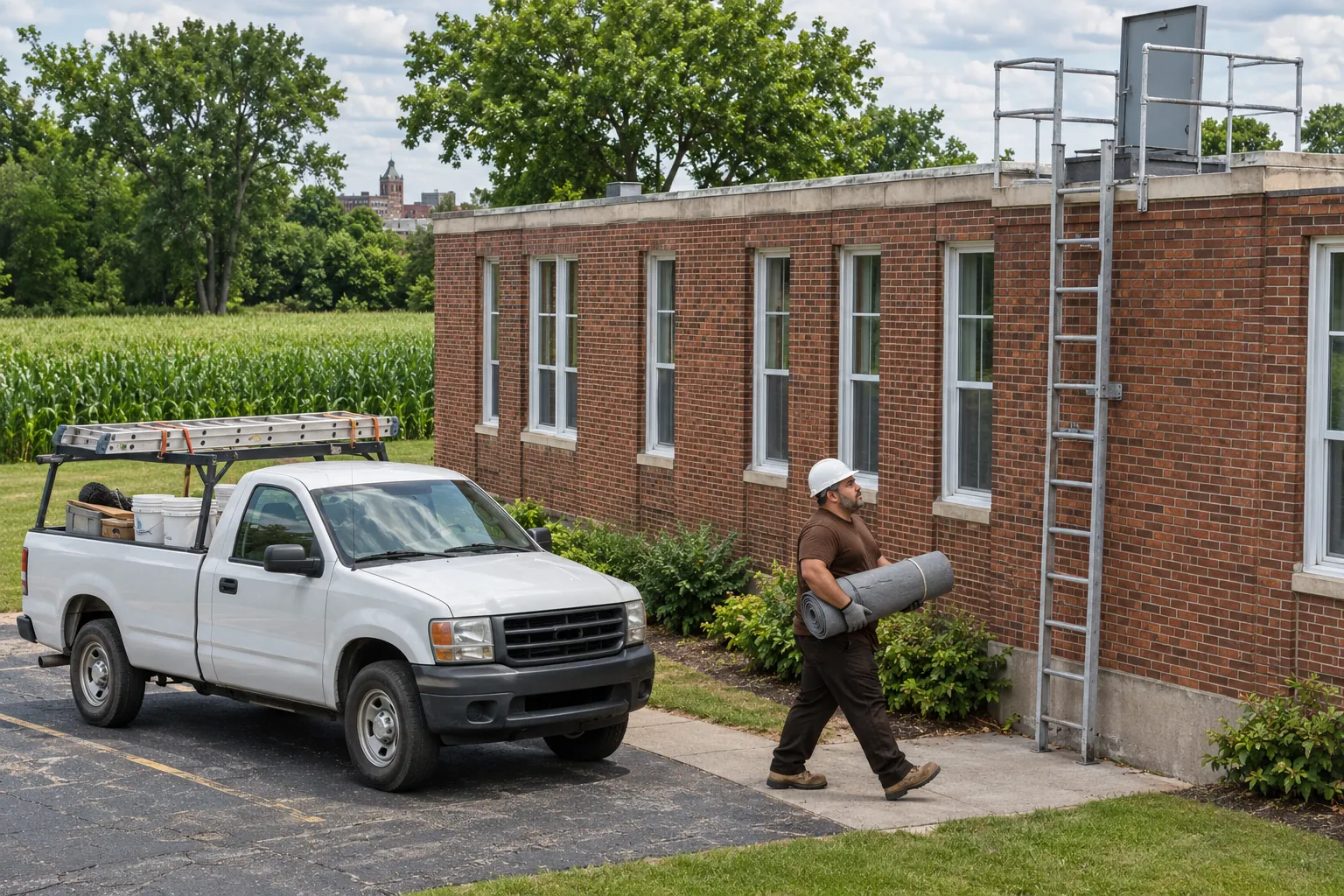
Screw rows, laps, ridge caps, and skylight panels near the leak get checked from the roof, panel by panel.
From inside, the framing under the leak is checked for rust scale or bending before any panel comes off.
Worn screws and washers on the leaking rows are swapped, with larger screws where holes have stripped.
Laps get stitched and sealed, and panels with holes are replaced with matching steel.
A hose run over the repaired laps and screw rows confirms they stay dry inside.
Steel buildings often carry a low-slope section, rooftop units, or a leak that hides behind insulation.
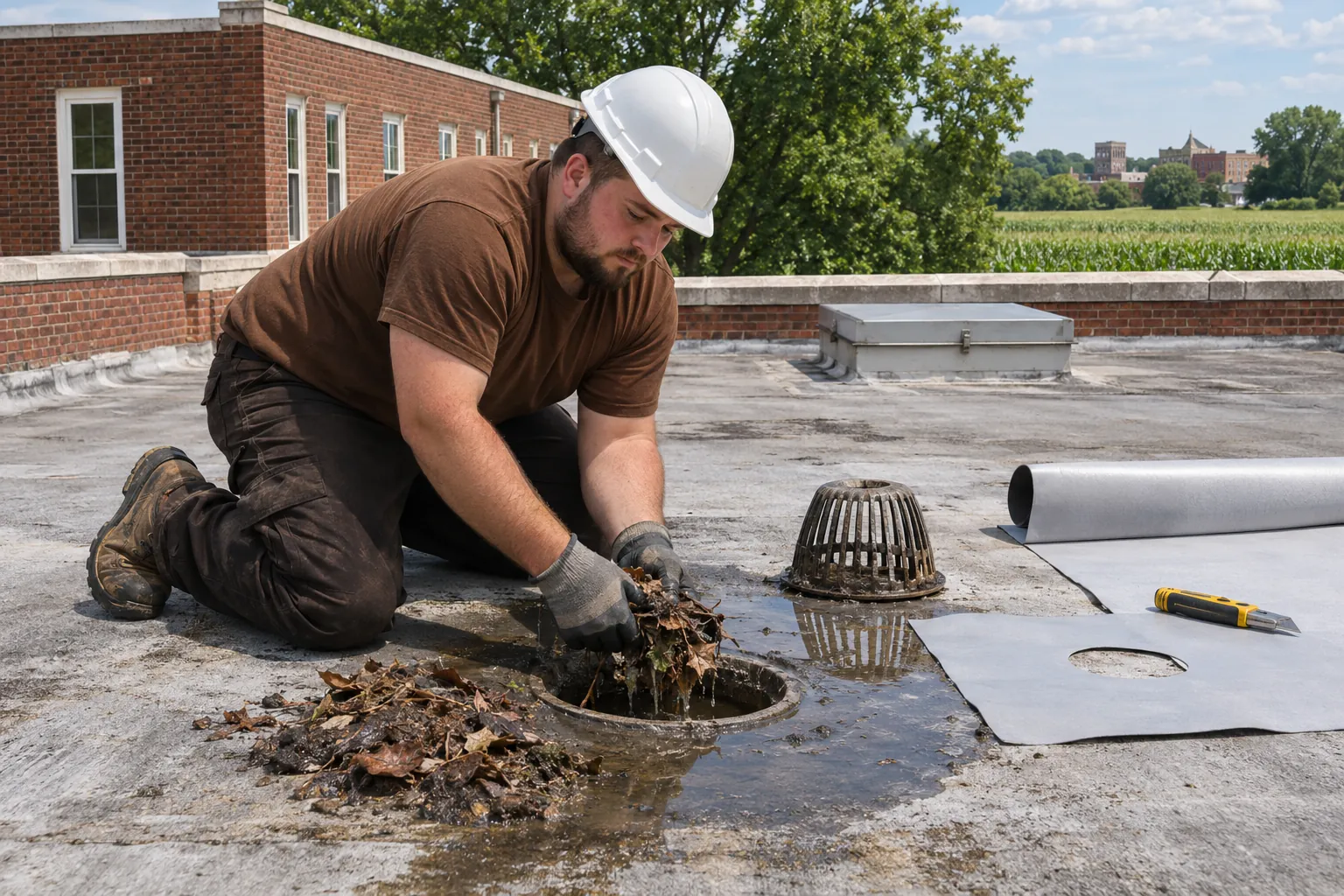
Office wings and loading areas on metal buildings often have a low-slope membrane that leaks at its own seams.
See flat roof repairs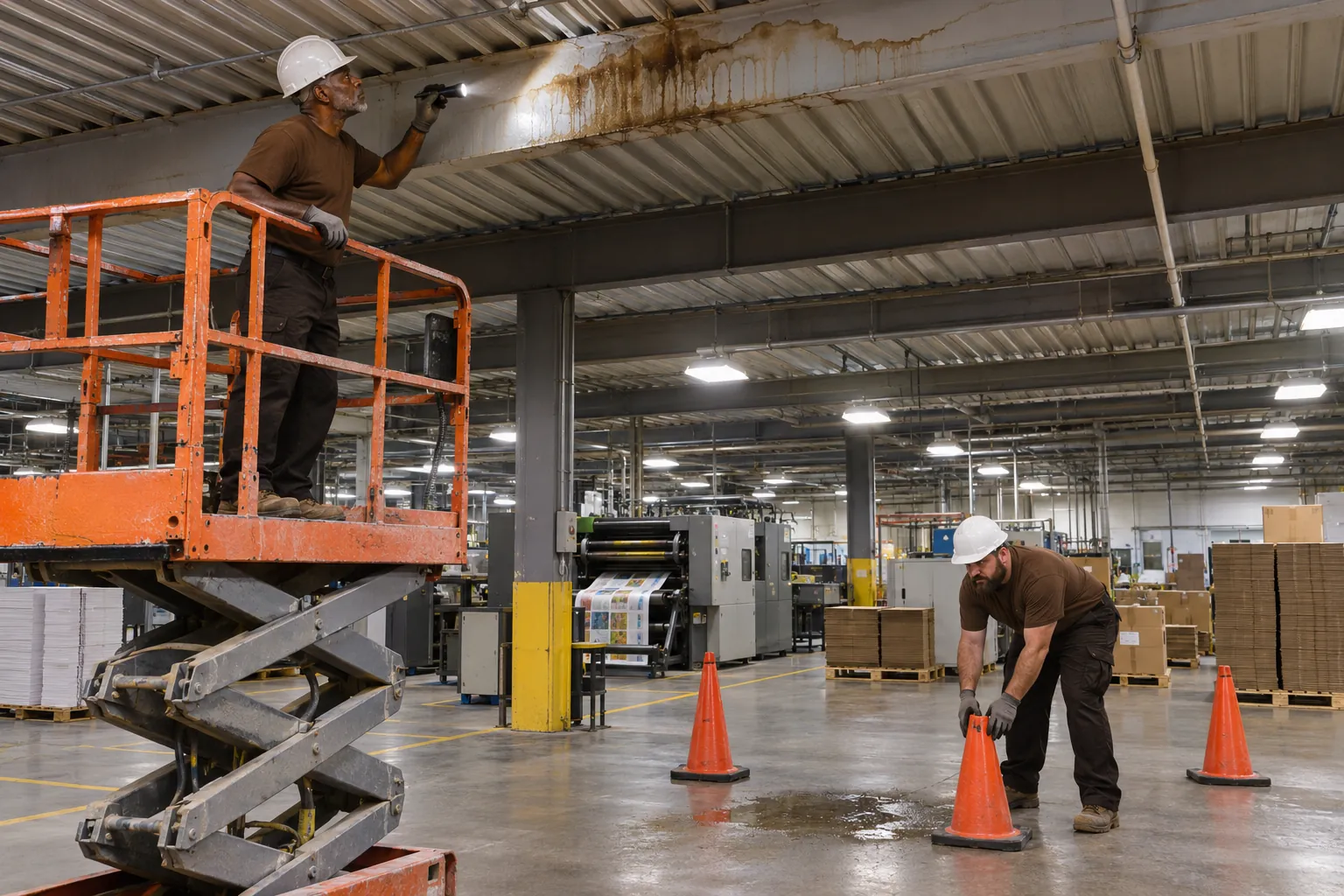
Faced insulation under a metal roof hides where water enters, so tracing comes first on those leaks.
See leak tracing and repair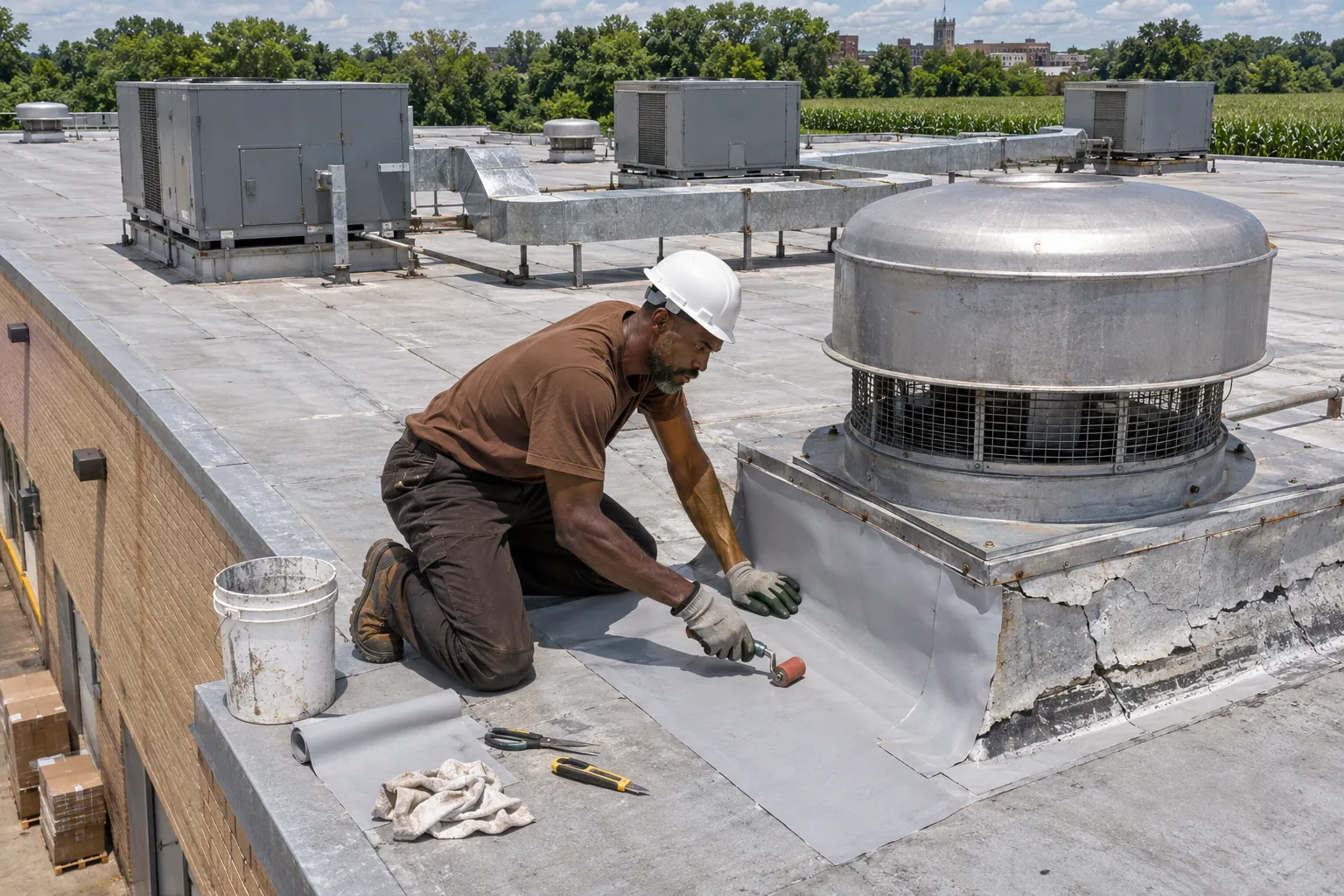
Plants with metal roofs carry exhaust fans and curbs that need flashing work planned around production.
See plant roof repairsAnswers on screws, seams, rust, and whether a metal roof can be saved.
Replace the worn screws with new or oversized fasteners and fresh washers. Where a whole run is failing, every screw on that run gets replaced so the repair holds through summer heat and winter cold.
Cleaning the lap, tightening or adding stitch screws, and sealing it with butyl tape, mastic, or reinforced fabric. End laps and ridge seams take the same treatment because water works in there first.
When rust has eaten through the steel, the panel has lost strength at a lap or purlin, or holes keep opening. Light surface rust gets cleaned and primed, and the panel stays.
Age alone decides little. If the panels and framing are solid, fasteners, laps, trim, and single panels can all be repaired. Rust holes across the roof or damaged framing point to new panels.
Oversized screws grip holes that have stripped or rusted wider, and their larger washers cover the worn ring around the hole. Badly torn holes get a small sealed patch first.
Cold shrinks the panels and opens worn laps, and snow sits against ridge caps and end laps for days. Meltwater then finds every loose screw and gap that summer rain missed.
Clearing does little for leaks on its own. Sealing end laps and ridge closures before winter does more, since drifts only leak where an opening already exists. Heavy snow load is a separate question for a structural engineer.
Tell us where the drips line up under the panels. We will check the screws, laps, and steel, then price the repair.