Rooftop Unit Curbs
Short curb flashing lets snowmelt over the top, and open sheet-metal seams on the unit drip inside the curb.

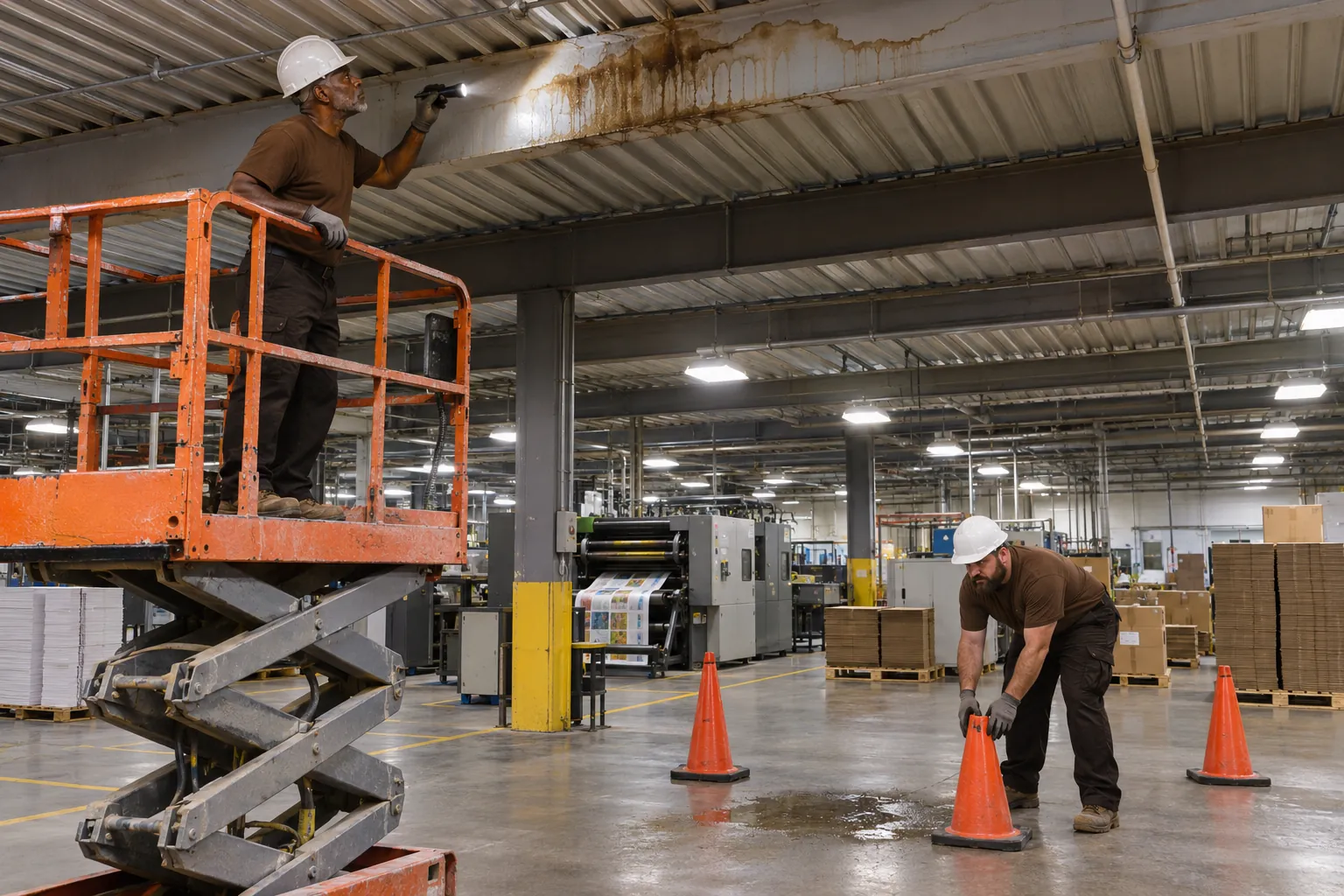
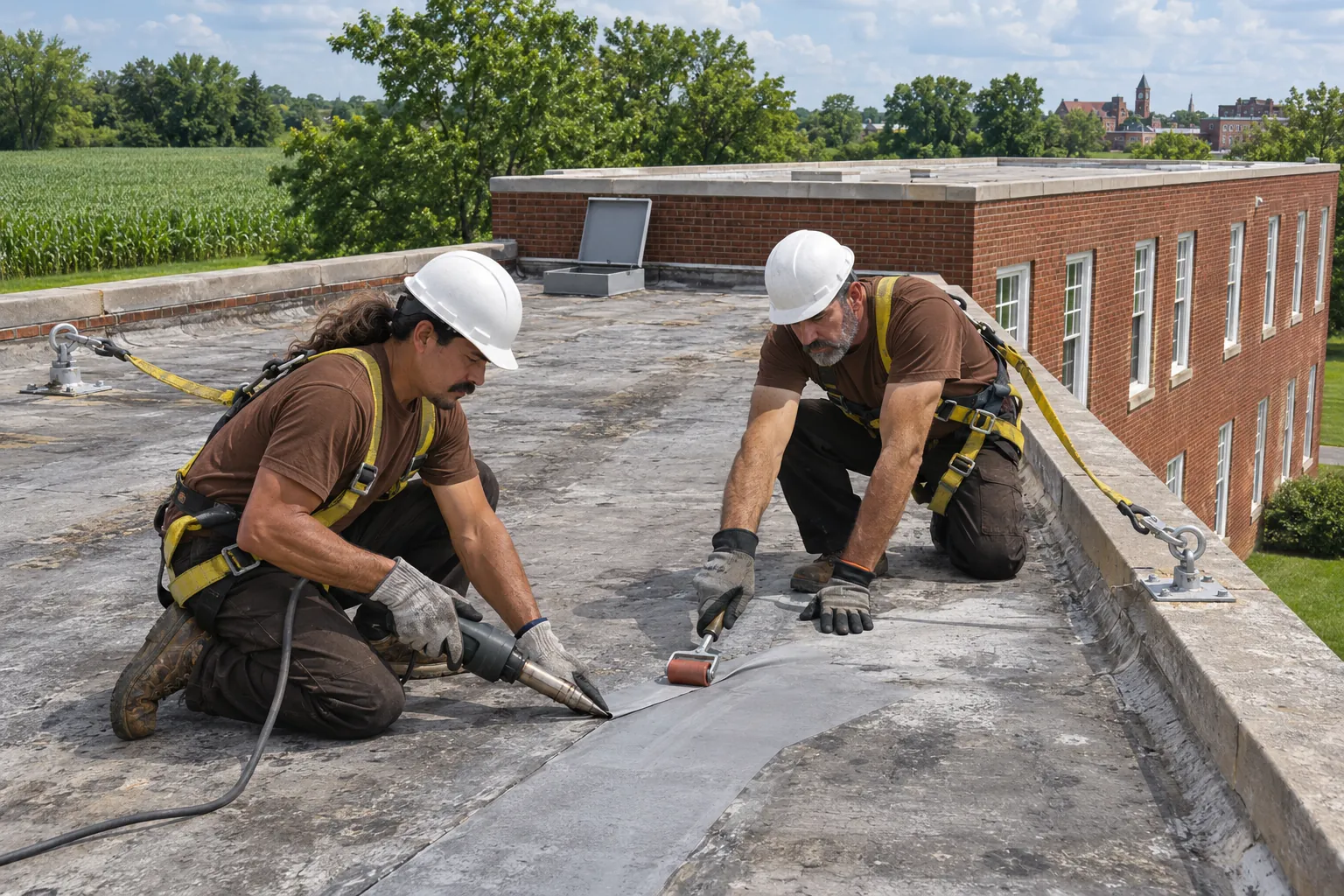
Terre Haute commercial roof leak repair starts inside at the stain. We follow the water up to the roof and seal the opening it came through.
Terre Haute commercial roof leak repair fixes one entry point at a time. These signs show when tracing pays off and when the roof needs more.
Water inside rarely sits under the opening. These are the five places we trace it back to.
Short curb flashing lets snowmelt over the top, and open sheet-metal seams on the unit drip inside the curb.
Rubber boots crack around plumbing vents and conduit, and pitch pans dry out and shrink away from the pipe.
Coping joints and wall flashing let water into the wall cavity, where it runs down and shows up along an inside wall.
Ice and debris back water up at the drain or gutter until it rises over the flashing edge.
A single opened lap far from any equipment can feed water along the deck to a stain many feet away.
Each method seals one kind of entry point. The tracing tells us which one applies.
The drip is marked inside, measured to a wall or column, and found again on the roof. From there we work upslope along the deck.
Curb flashing gets rebuilt, open seams on the unit housing get sealed, and condensate lines get rerouted to drain away.
When nothing shows on the surface, suspect areas get a controlled water test or a moisture scan to find the wet path.
The opening is closed with the same material as the roof, so the fix bonds to it and moves with it.
Compare sealing the source against replacing the roof over a leak.
| Roof Detail | Repair Now | Replace The Roof |
|---|---|---|
| Leak at a unit curb | Re-flash the curb and seal the unit housing | New flashing at every curb with a new roof |
| Leak at a pipe boot | Replace the boot or pitch pan on that pipe | All boots replaced during a reroof |
| Leak at a wall | Reseal coping joints and wall flashing | New coping and flashing on every wall |
| Wet area under the leak | Replace the wet boards around the source | Replace insulation roof-wide |
| Time and disruption | One area opened, sealed, and tested | Full staging and weeks of roof work |
A leak that keeps coming back usually has a second opening nobody found. Call and we will trace it from inside.
A leak call runs in five steps, from the bucket inside to the water test on the roof.
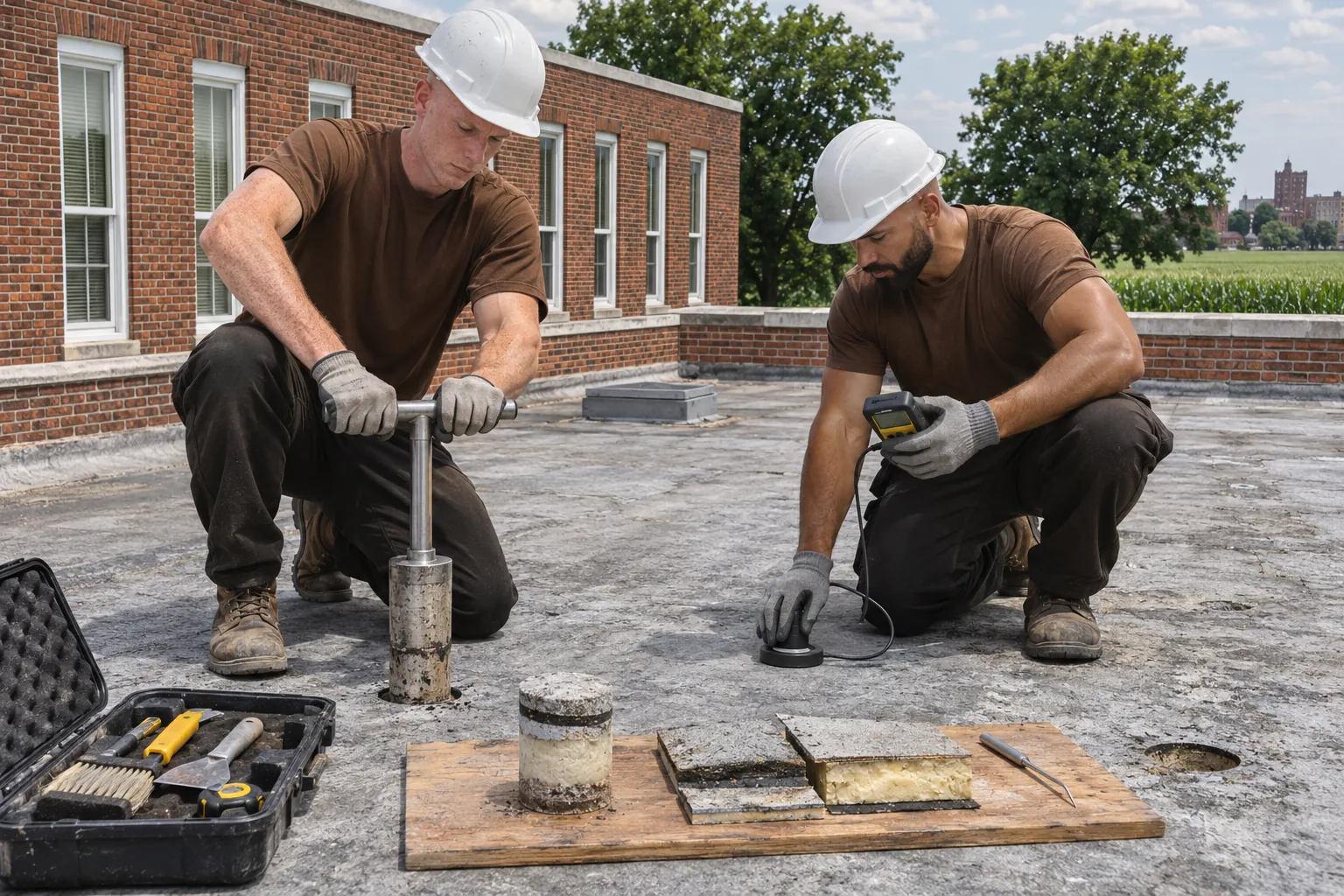
The stain or drip is marked and measured from the nearest wall, column, or skylight so it can be found above.
On the roof, curbs, boots, seams, and drains upslope of the mark get checked in order.
If nothing shows, a moisture scan or a controlled water test finds the wet path through the insulation.
The opening gets a repair matched to the roof, and any wet boards around it are replaced.
Water run over the repaired spot confirms the ceiling below stays dry.
Once the source is found, the repair itself depends on the roof system and the building.
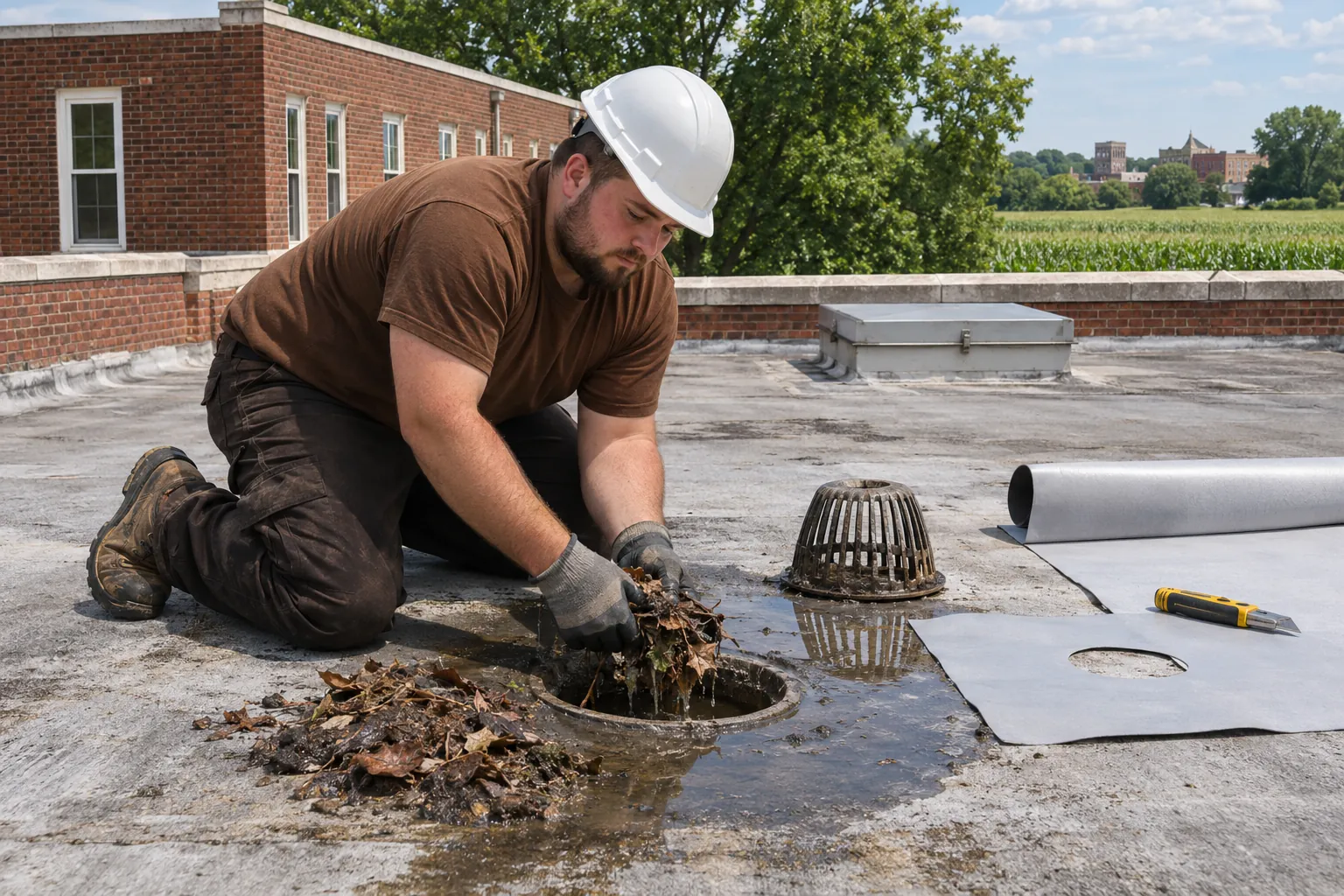
A traced leak on a low-slope roof often ends at a seam, blister, or drain that needs a matched membrane patch.
See flat roof repairs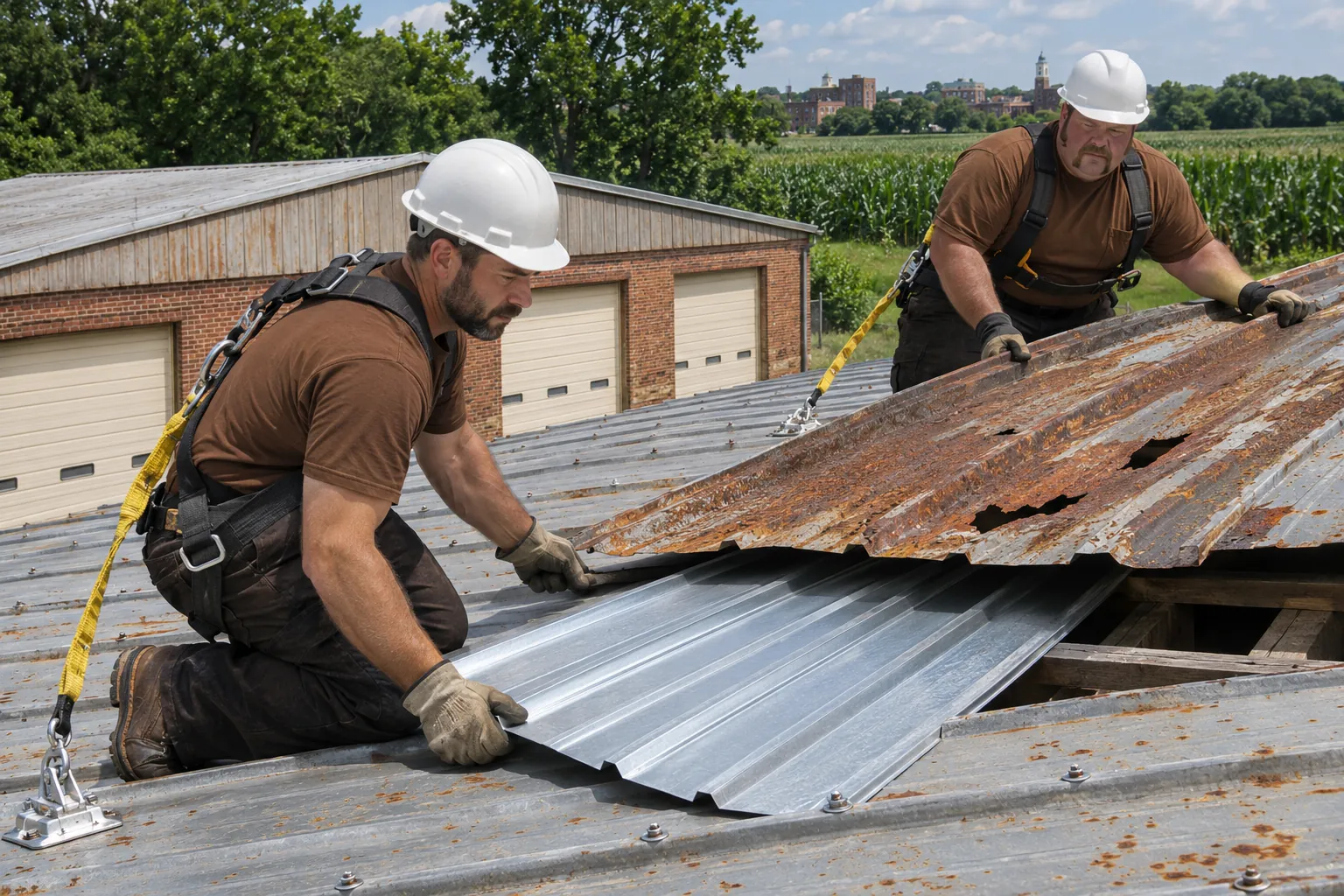
Leaks under steel roofs usually end at a screw row or end lap, which takes a fastener or lap repair.
See metal roof repairs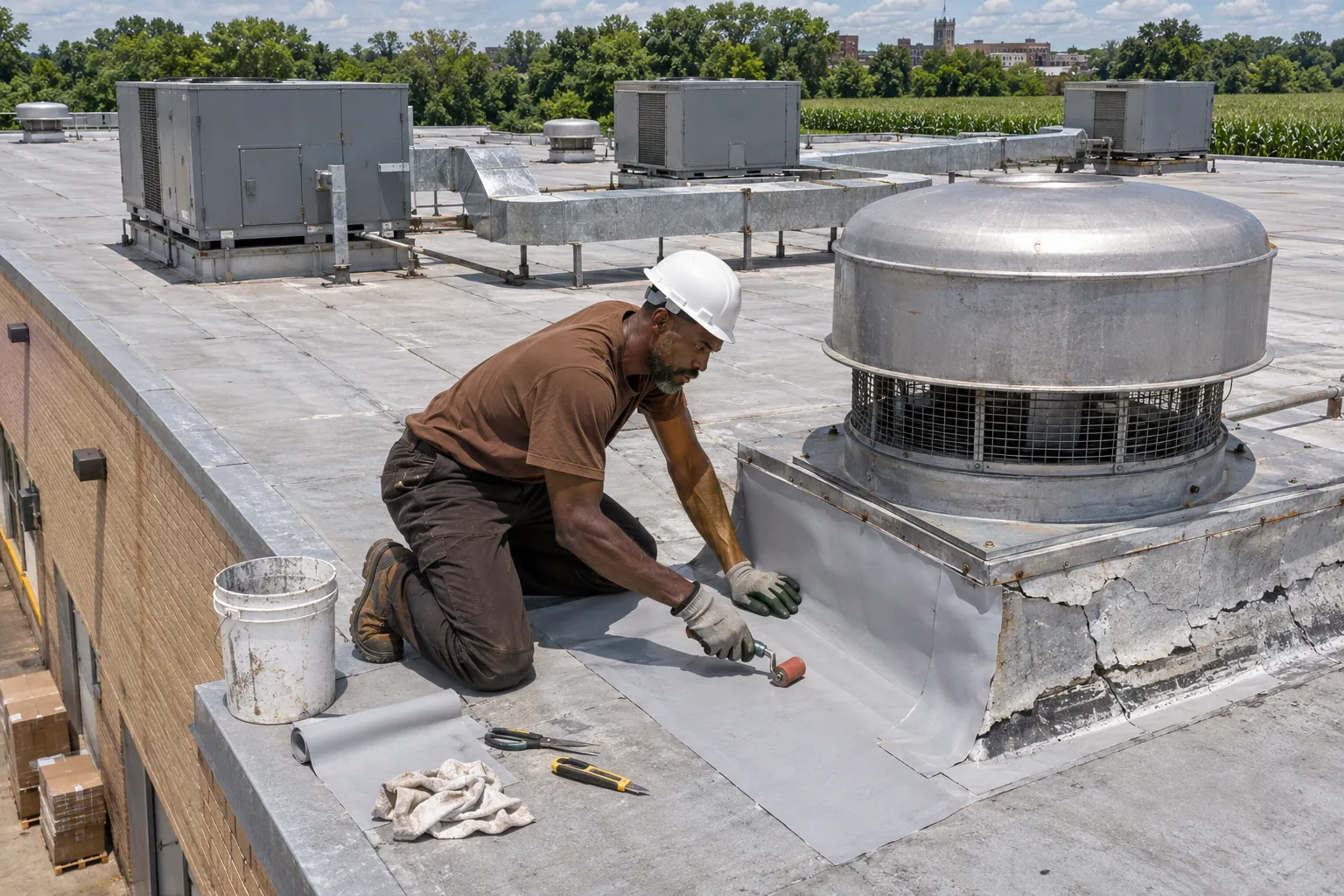
Plant leaks often start at an exhaust fan or stack curb, where heat and residue have worn the flashing.
See plant roof repairsAnswers on tracing leaks, rooftop units, price, and who pays.
Mark the drip on the floor and measure it to the nearest column line. On the roof, we find that spot and work upslope, checking curbs, boots, seams, and drains, since water runs along the deck before it drops.
Short or cracked curb flashing, open seams in the unit housing, loose access panels, and condensate lines draining onto the roof are the usual causes. Snowmelt piled against a short curb finds them all.
Rain blown sideways reaches openings that straight rain misses: coping joints, wall flashing, the uphill side of a curb, and loose trim at panel ends. Tracing those leaks starts at the wall facing the storm.
How hard the leak is to find, the roof type, the number of entry points, wet insulation to replace, and access to the spot. Drains, curbs, and walls take more detail work than a field puncture.
Tracing is part of the free roof walk when the source shows on the surface. When a water test or moisture scan is needed, it appears as its own line in the estimate before it happens.
The lease sets it. Many leases put roof repairs on the landlord, while net leases can shift them to tenants. Tenants should report leaks in writing right away, and our written source and repair notes help both sides settle it.
Check the lease first, then tell the landlord in writing. If the lease lets tenants arrange repairs, we can trace the leak and send the findings to both parties.
Tell us where the water lands inside and when it shows up. We will trace it to the roof and seal the opening.