Edges and Parapets
Coping joints, wall flashing, and edge metal take wind and drifting snow first. A split at the coping lets water run down inside the wall before it shows on a ceiling.
As a Terre Haute commercial roof repair contractor, we find where water gets into flat and metal roofs and fix that spot. Estimates are free.
Terre Haute commercial roof repair calls trace back to five places on a roof. Here is what we check in each one before pricing anything.
Coping joints, wall flashing, and edge metal take wind and drifting snow first. A split at the coping lets water run down inside the wall before it shows on a ceiling.
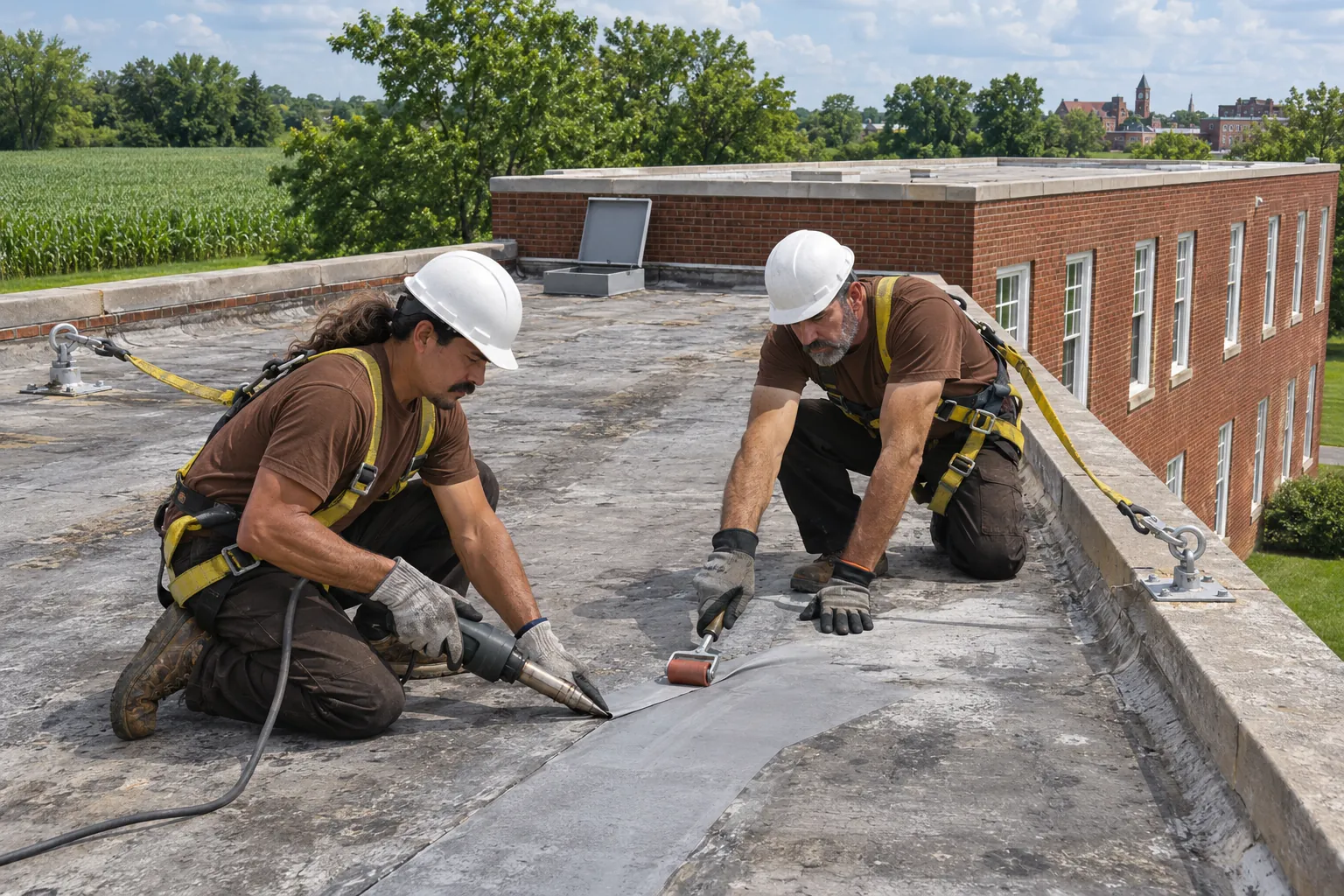
Laps on single-ply and built-up roofs open where foot traffic and freeze cycles work them. We probe each seam near the reported leak and weld or tape the weak runs.
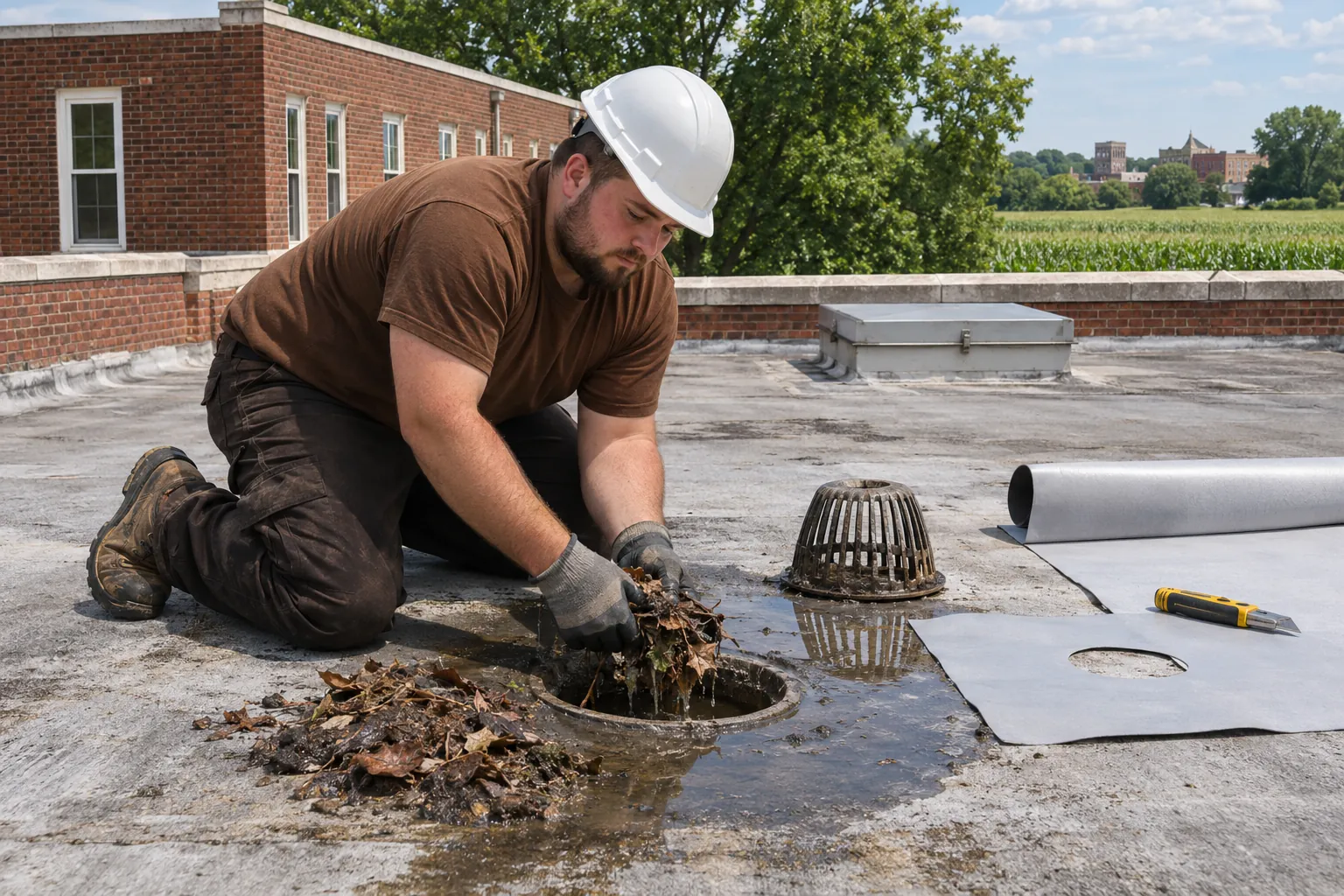
Leaves, gravel, and a loose clamping ring keep water sitting at the bowl. Standing water there finds every pinhole in the membrane around it.
HVAC curbs, exhaust fans, and pipe boots are the busiest leak points on most roofs. Cracked sealant and short flashing heights let snowmelt over the top.
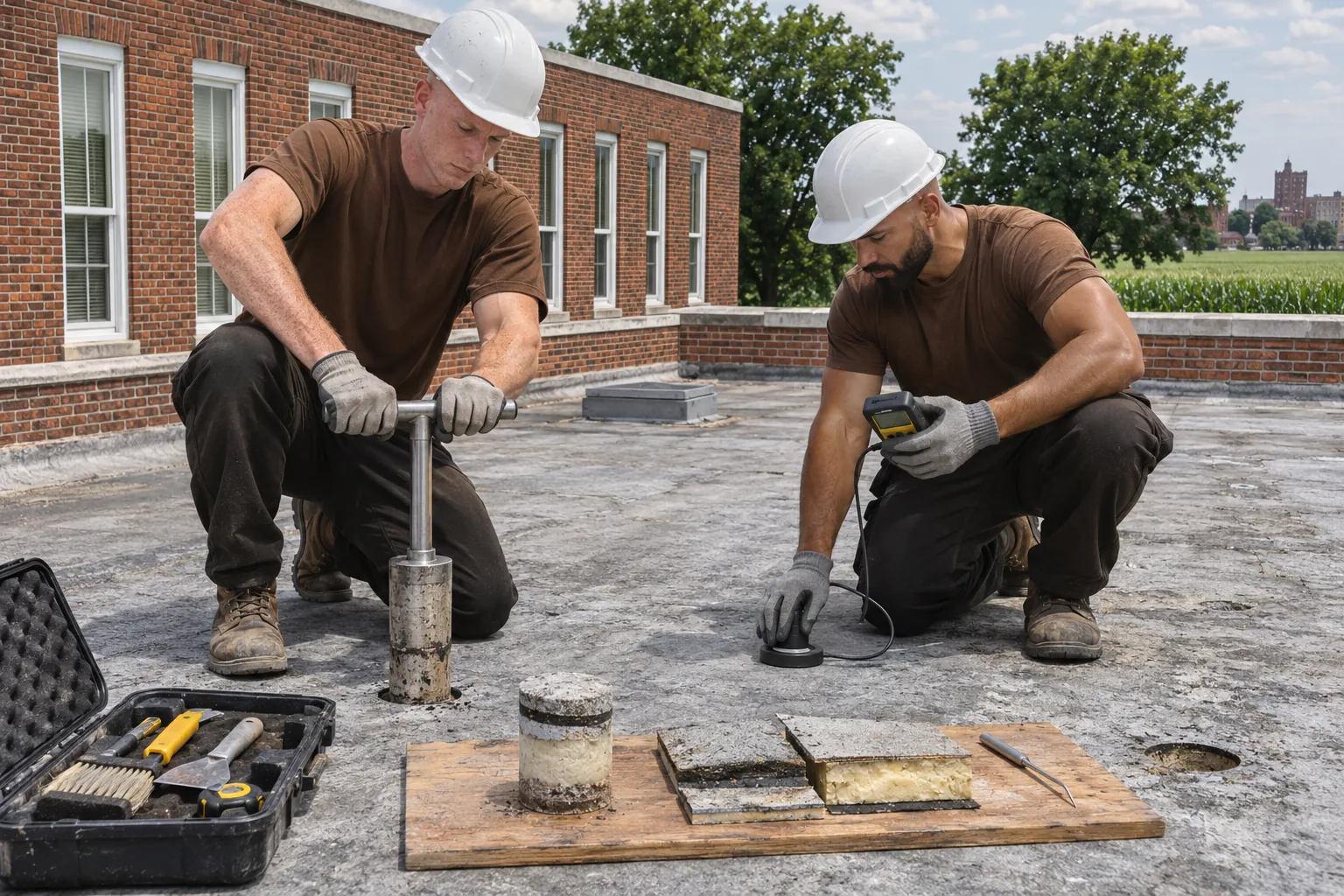
Water that gets past the membrane spreads through the insulation and along the deck. Core cuts tell us how far it went before we price the repair.
Most leaks on a roof with life left in it get fixed in place. This table shows where a repair holds and where a new roof makes more sense.
| Roof Detail | Repair Now | Replace The Roof |
|---|---|---|
| Open seams or laps | Weld, tape, or re-stitch the open run, then probe it | New membrane or panels when seams fail across the field |
| Wet insulation | Cut out and replace the wet boards under the repair area | New insulation everywhere when cores read wet over large areas |
| Drains and low spots | Reset clamping rings, re-flash bowls, add a small cricket | A tapered insulation layout drawn for the whole roof |
| Metal fasteners | Swap backed-out screws and washers along the leaking runs | New panels when rust has thinned the steel roof-wide |
| Curbs and flashing | Re-flash the curb, pipe boot, or parapet that leaks | New flashing at every detail as part of a reroof |
| Building use | One area opened and closed per visit while work goes on below | Larger staging, more noise, and more weeks of roof work |
Pick the roof you have and jump to the repairs we make on it. Each panel links to the full repair page.
Low-slope TPO, EPDM, modified, and built-up roofs over stores, offices, and plants. Split seams, punctures, blisters, and drains that hold water get repaired, and the insulation under each repair gets checked.
Typical Repairs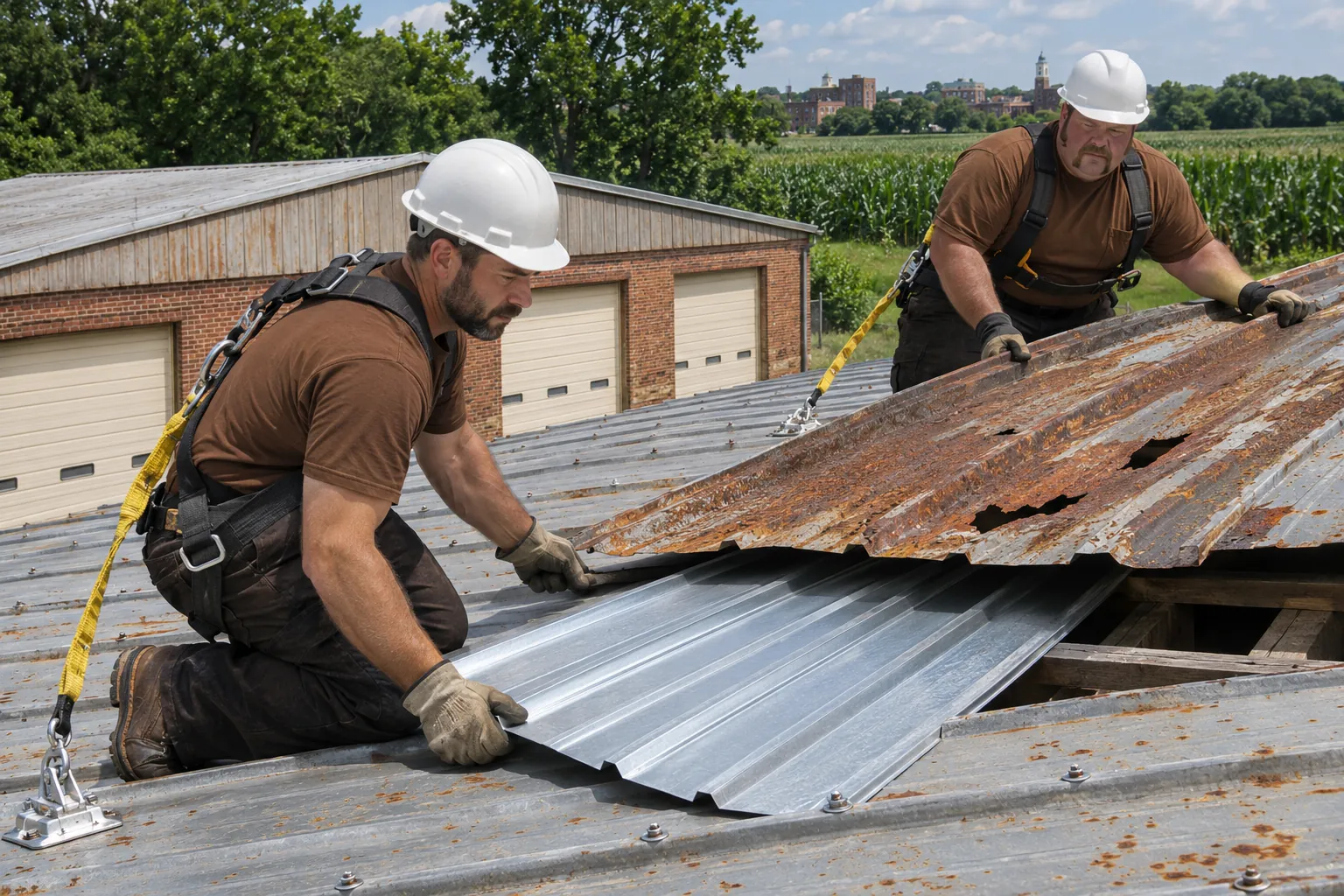
Exposed-fastener and standing seam roofs on shops, warehouses, and farm buildings. Screws, end laps, ridge caps, and rusted panels are repaired so water stops at each joint.
Typical Repairs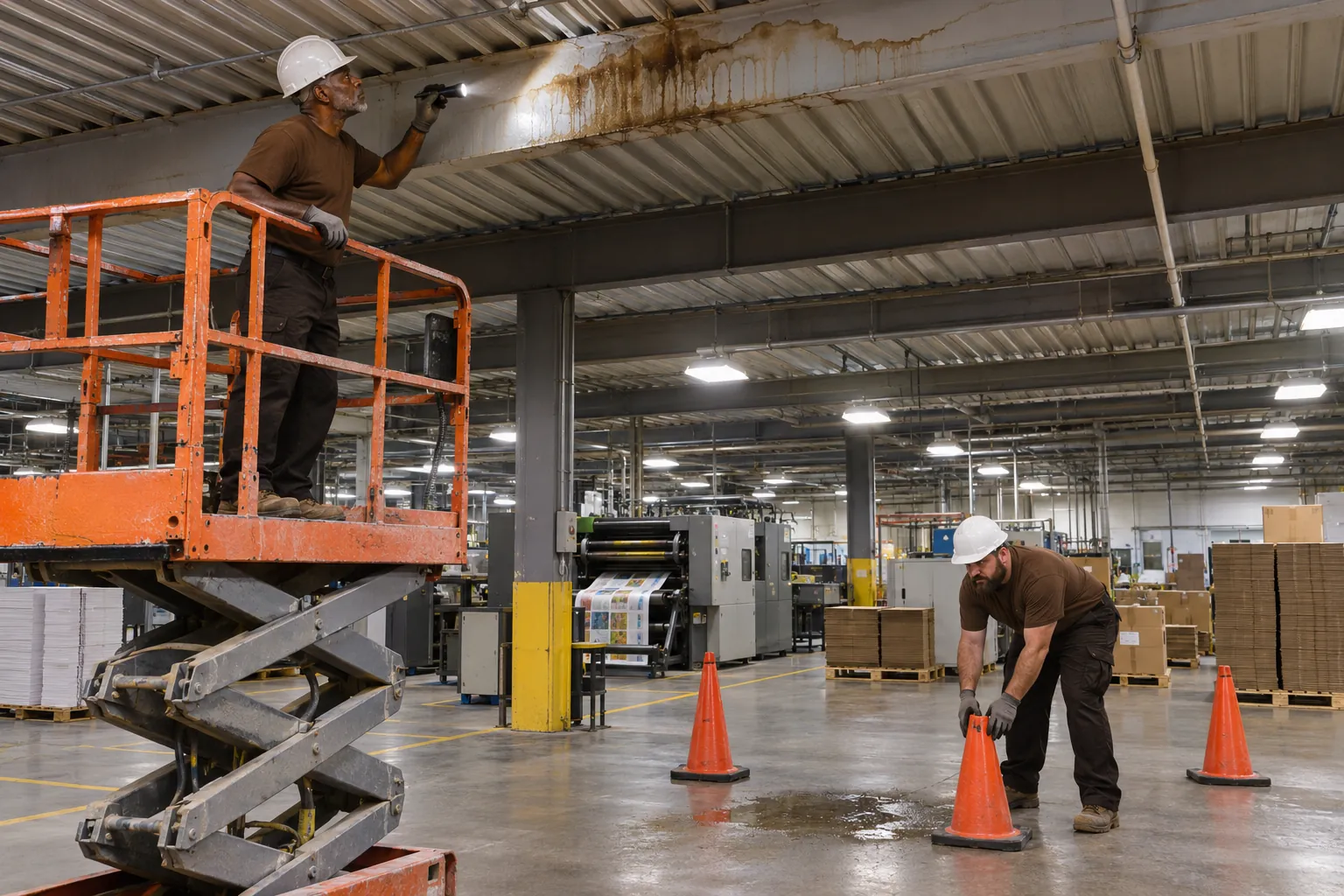
Active leaks traced from the stain inside back to the opening on the roof. Once the source is found, it is sealed with a repair matched to that roof system.
Typical Repairs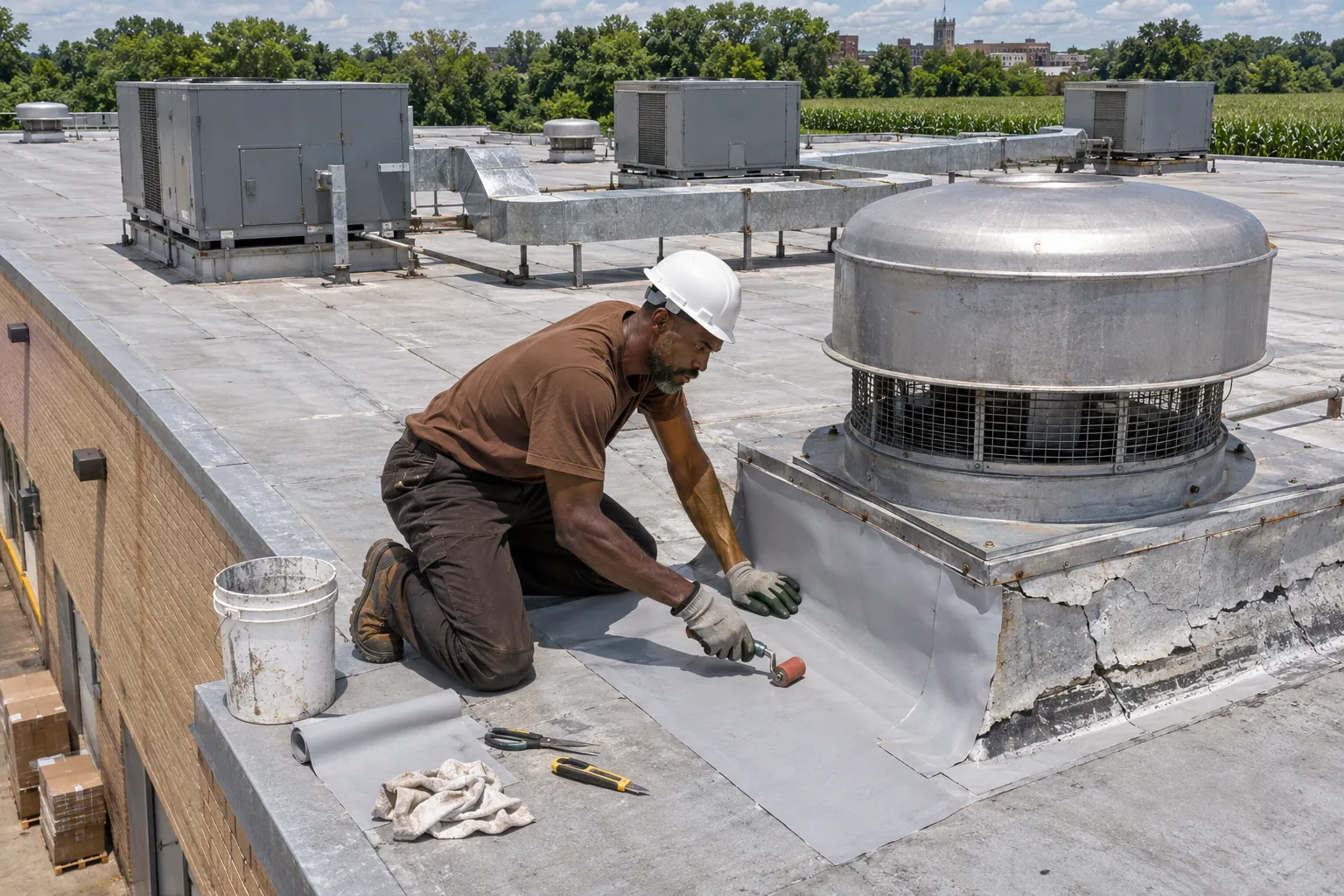
Plant roofs with fans, stacks, and heavy equipment on them. Repairs are planned around production, and flashing and membrane worn by exhaust or residue get rebuilt.
Typical RepairsMove stock away from the drip and call. We start on the roof above the stain and work toward the opening that let the water in.
Each repair visit follows the same five steps, from the first roof walk to the photos you keep.
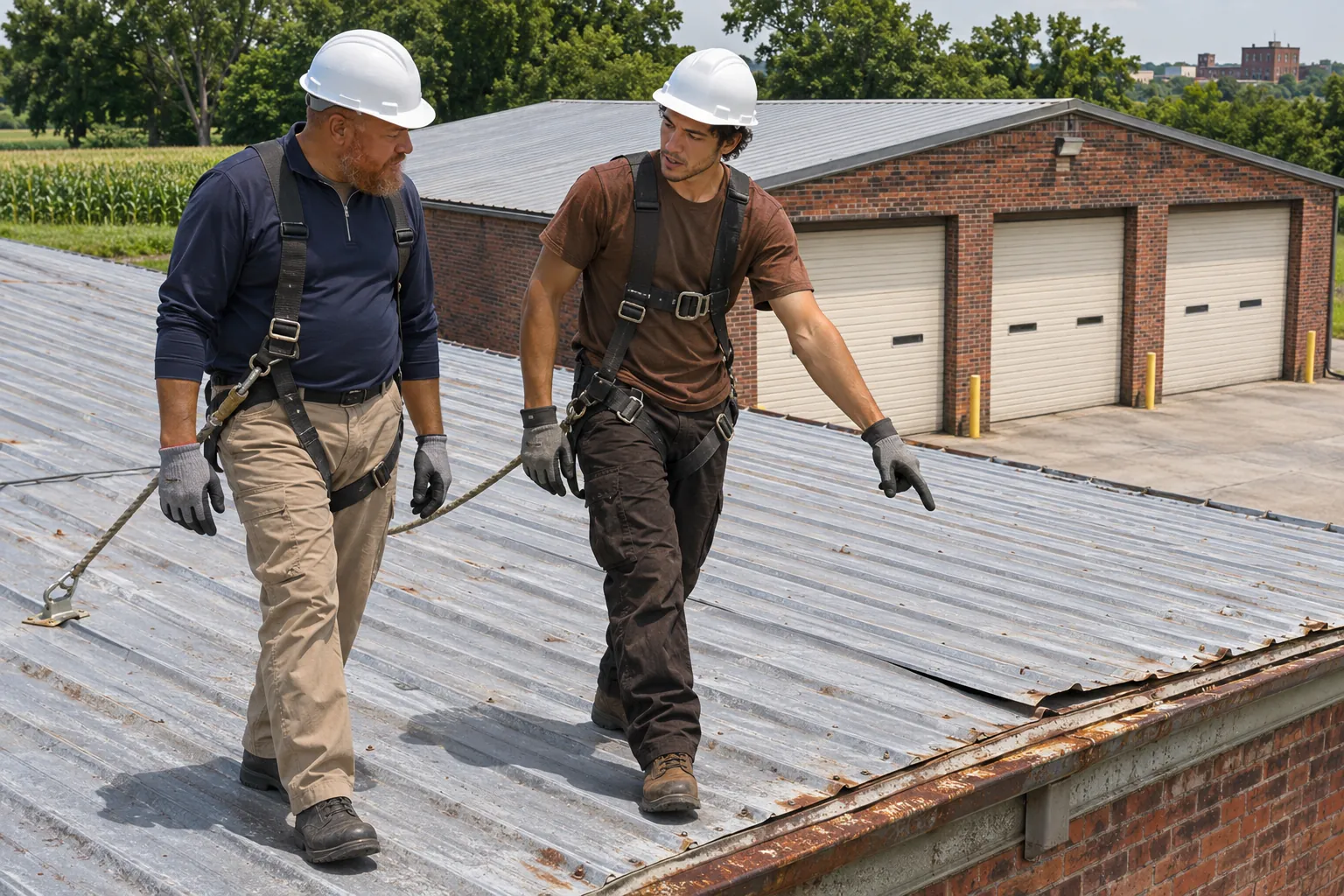
Every seam, drain, curb, and edge near the reported leak gets checked, and the stain inside is matched to the roof above it.
Meter readings and a core cut show whether the insulation under the problem area is dry or needs replacing.
You get a written repair scope with photos to compare against the lease, the budget, or a replacement quote.
One area is opened at a time, wet material is replaced, and that area is sealed before work stops for the day.
Seams are probed, drains are flushed, and dated photos record what was found and what was repaired.
These signs sort a repair call from a replacement talk before anyone climbs a ladder.
We take commercial roof repair work in Terre Haute and five towns nearby. Building outside them? Please call us or send us a message.
| Town | County | What We See On Roofs There |
|---|---|---|
| Terre Haute Home Base | Vigo County | Plant, warehouse, and storefront roofs with crowded curbs and old patches |
| Brazil | Clay County | Metal shops and pole buildings with worn screws and end laps |
| Linton | Greene County | Roofs owned from out of town, repaired with a photo report |
| Clinton | Vermillion County | Taller plant roofs reached by hatch, ladder, or lift |
| Pittsboro | Hendricks County | Big single-ply warehouse roofs punctured by foot traffic |
| Sullivan | Sullivan County | Small retail and shop roofs with skylights and old hatches |
Short answers to what owners ask on the first call. The full list is on the FAQ page.
Protect what sits under the drip: move stock, set out a bucket, and note when it leaks, such as in heavy rain or snowmelt. Then call. Water runs along the deck, so the opening on the roof is often several feet from the stain.
Small leaks rarely stay small. Each rain soaks more insulation, and wet boards lose their grip on the deck. A temporary seal in winter, then a full repair in dry weather, keeps the damage from spreading.
Repair fits when the damage sits at a few seams, flashings, or drains and the insulation around it is mostly dry. Replacement fits when leaks keep moving, the membrane or panels are worn out, or cores find wet insulation over large areas.
Yes, when the damage stays in one area. The damaged membrane or panels come out, wet insulation is replaced, and the new section ties into the old roof at the seams and flashings. Other worn areas still need their own repair.
The lease decides. Many commercial leases put roof repairs on the landlord, while triple-net leases often pass them to tenants. Keep our written cause and scope with the lease file so both sides work from the same record.
Size of the damaged area, the roof system, how much wet insulation comes out, and how hard the spot is to reach all move the price. Drains, curbs, and wall flashing take more detail work than a puncture in the open field.
Tell us where the water shows up and what kind of roof sits over it. We will walk it, find the opening, and price the repair.